Introduction
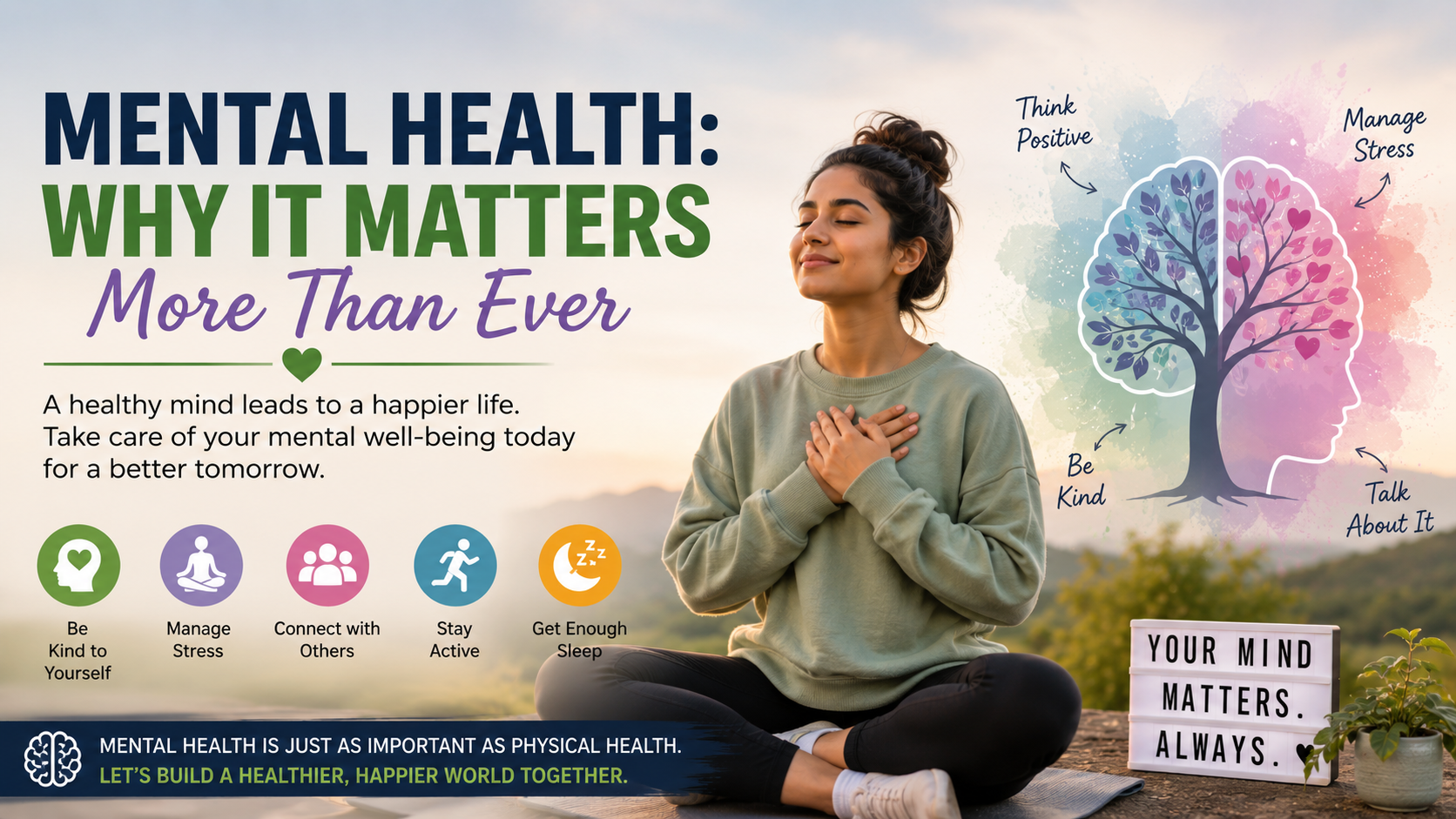
Health is often associated with physical fitness, but true well-being also depends on mental health. Mental health influences how people think, feel, behave, and cope with life’s challenges. In today’s fast-paced and highly connected world, increasing academic pressure, demanding jobs, financial responsibilities, and constant exposure to digital media have made mental health more important than ever. Taking care of our minds is just as essential as taking care of our bodies because good mental health enables us to lead balanced, productive, and fulfilling lives.
Unfortunately, mental health is still misunderstood in many communities. Some people hesitate to discuss emotional struggles due to fear of judgment or social stigma. Raising awareness about mental health can encourage individuals to seek help when needed and create a society that values emotional well-being alongside physical health.
What Is Mental Health?
Mental health refers to a person’s emotional, psychological, and social well-being. It affects how individuals manage stress, make decisions, build relationships, and handle everyday situations. Good mental health does not mean feeling happy all the time. Instead, it means having the ability to manage emotions, recover from setbacks, adapt to change, and continue functioning in daily life.
Mental health exists on a spectrum, and everyone’s experiences are different. Just as physical health can change over time, mental health can also improve or decline depending on life circumstances, support systems, and personal habits.
Why Mental Health Matters More Than Ever
Modern lifestyles present unique challenges that can affect emotional well-being. Long working hours, academic competition, social media comparisons, financial uncertainty, and rapid technological changes often create stress and anxiety. Many people also struggle to maintain a healthy balance between work, family, and personal life.
The COVID-19 pandemic further highlighted the importance of mental health by increasing feelings of loneliness, uncertainty, and emotional distress for millions of people around the world. These experiences demonstrated that mental health is not a luxury but a necessity for maintaining overall well-being.
When mental health is neglected, it can affect concentration, relationships, productivity, physical health, and quality of life. Conversely, good mental health improves resilience, confidence, communication, and the ability to overcome challenges.
Factors That Influence Mental Health
Several factors contribute to mental well-being, including:
- Physical health and regular exercise.
- Healthy eating habits and proper nutrition.
- Adequate sleep and rest.
- Supportive family and friendships.
- Safe and positive environments.
- Financial stability and job satisfaction.
- Effective stress management skills.
- Access to healthcare and professional support when needed.
Understanding these influences helps individuals make healthier choices that protect their emotional well-being.
Common Challenges to Mental Health
Many people experience periods of emotional difficulty during different stages of life. Common challenges include:
- Stress caused by work, studies, or family responsibilities.
- Anxiety related to uncertainty or major life changes.
- Feelings of loneliness or social isolation.
- Burnout resulting from excessive workload.
- Grief after losing a loved one.
- Low self-esteem and lack of confidence.
Experiencing these challenges does not mean a person is weak. Seeking support and addressing problems early can prevent them from becoming more serious.
Benefits of Good Mental Health
Maintaining positive mental health offers many advantages. Individuals with good emotional well-being often experience:
- Better concentration and decision-making.
- Improved relationships with family and friends.
- Greater self-confidence and emotional stability.
- Increased productivity at school or work.
- Better physical health through healthier lifestyle choices.
- Improved ability to manage stress and adapt to change.
- Higher overall life satisfaction and happiness.
These benefits demonstrate that mental health contributes to success in every aspect of life.
Ways to Maintain Good Mental Health
Protecting mental health requires consistent self-care and healthy habits. Some effective practices include:
- Exercising regularly to improve mood and reduce stress.
- Eating a balanced and nutritious diet.
- Getting seven to nine hours of quality sleep each night.
- Spending time with supportive friends and family.
- Practicing relaxation techniques such as meditation, deep breathing, or mindfulness.
- Limiting excessive screen time and social media use.
- Setting realistic goals and maintaining a healthy work-life balance.
- Talking openly about emotions with trusted people.
- Seeking professional help when emotional difficulties become overwhelming.
Small daily habits can make a significant difference in maintaining long-term mental well-being.
Breaking the Stigma Around Mental Health
One of the biggest barriers to improving mental health is stigma. Many people avoid discussing emotional struggles because they fear criticism or discrimination. This silence often prevents individuals from receiving the help they need.
Creating awareness through education, open conversations, and supportive communities can reduce misconceptions about mental health. Encouraging kindness, empathy, and understanding allows people to seek assistance without shame.
Families, schools, workplaces, and communities all play an important role in promoting positive mental health by creating environments where individuals feel safe, respected, and supported.
Conclusion
Mental health is a vital part of overall health and deserves the same attention as physical well-being. In today’s rapidly changing world, maintaining emotional wellness has become more important than ever. Good mental health improves relationships, strengthens resilience, enhances productivity, and contributes to a happier and more meaningful life.
By adopting healthy habits, supporting one another, and encouraging open conversations about emotional well-being, society can reduce stigma and help individuals live healthier lives. Investing in mental health is an investment in a stronger, more compassionate, and more productive future for everyone.
Verification Code:MH9P5ZR81QX