Introduction
Before eating a meal, many people check whether the food looks fresh, smells pleasant, and has been prepared properly. Yet one important detail can be overlooked: the cleanliness of the hands holding the spoon, picking up a sandwich, or touching the food.
Throughout the day, hands come into contact with phones, money, door handles, transport rails, and countless other objects. Some of these surfaces may carry microorganisms that can reach the mouth during a meal. Washing hands before eating helps interrupt this route and lowers the chance of swallowing harmful germs.
How Contamination Reaches Your Food
Imagine someone returning home after travelling on a crowded bus. They sit down for lunch without washing their hands. If their fingers have picked up germs from a contaminated surface, those microorganisms may transfer to the food.
The same problem can occur when children play outdoors, students share classroom equipment, or workers handle packages before eating a snack.
Not every surface contains harmful germs, and touching something does not automatically cause illness. However, cleaning hands before meals provides a simple precaution against contamination that may otherwise go unnoticed.
Why a Quick Rinse Is Not Enough
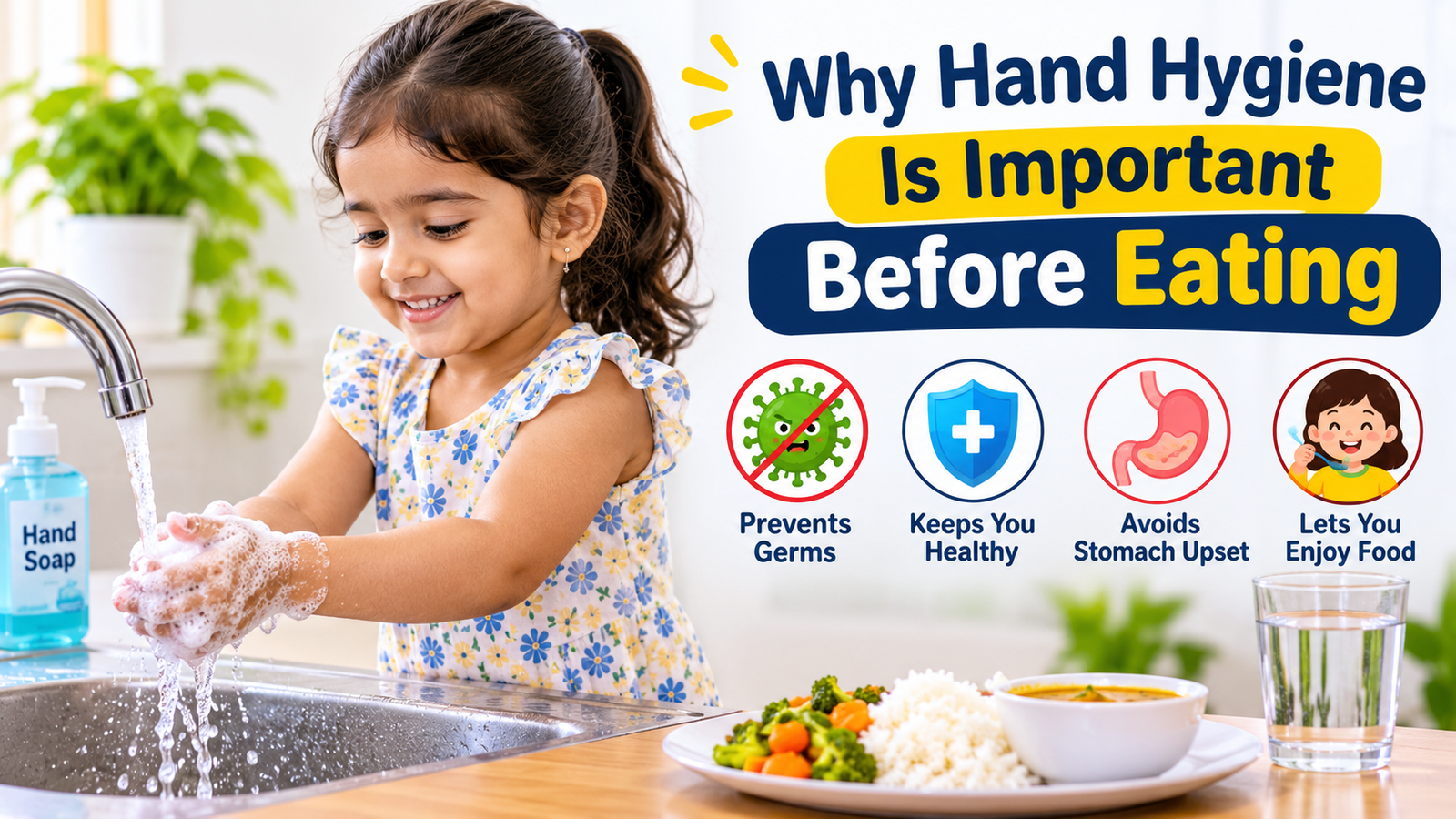
Water running briefly over the fingers may remove some visible dirt, but it is not a reliable substitute for washing with soap.
Soap helps loosen dirt, oils, and microorganisms from the skin so that they can be rinsed away. Proper technique matters because the fingertips, thumbs, and spaces between fingers are often missed during rushed washing.
Wet your hands with clean running water, apply soap, and rub all hand surfaces for at least 20 seconds. Rinse thoroughly and dry with a clean towel or an appropriate hand-drying method.
Make this a complete routine rather than a task performed only when your hands appear dirty. Microorganisms are not always visible.
Eating Outside Home Needs Extra Care
Food eaten at school, at the office, during travel, or in a public place may be handled under conditions you cannot fully control. Even when a meal is prepared safely, touching it with contaminated hands can introduce unwanted microorganisms.
Wash your hands before opening your lunchbox or handling ready-to-eat food. If a sink is unavailable, an alcohol-based hand sanitiser containing at least 60% alcohol can be a useful alternative when hands are not visibly dirty or greasy. Rub it over all hand surfaces until dry.
Sanitiser does not work equally well against every type of germ and is less effective on visibly dirty hands. Wash with soap and water as soon as practical.
Children Benefit From a Predictable Routine
Young children often move quickly between playing, touching objects, and asking for food. They may not notice when their hands have become dirty.
Caregivers can make handwashing part of the meal routine by washing their own hands alongside the child. A simple reminder before breakfast, lunch, dinner, and snacks helps turn the action into a regular habit.
For younger children, adult supervision can ensure that soap is used, all hand surfaces are cleaned, and hands are dried properly. The goal is to make hygiene an ordinary part of eating rather than something remembered only after visible mess appears.
Handwashing Protects the People Around You
Hand hygiene is not only about personal protection. People can transfer germs from their hands to shared serving spoons, plates, food containers, and other objects.
This matters especially when someone has diarrhoea, vomiting, or another infection that can spread through contaminated hands. Washing with soap and water at appropriate times helps reduce the possibility of passing certain infections to family members or colleagues.
Anyone preparing food for others should pay particular attention to handwashing after using the toilet, handling rubbish, cleaning, or touching raw animal products.
Small Habits That Make a Difference
A few practical steps can make pre-meal hygiene easier:
- Wash your hands before touching food, even if they look clean.
- Keep soap and a clean drying method available near the sink.
- Avoid touching ready-to-eat food unnecessarily after washing.
- Use a clean towel instead of a damp, visibly dirty cloth.
- Remind children to wash before sitting down to eat.
- Clean your hands again if you touch rubbish, raw meat, or another contaminated surface during food preparation.
If soap and water are unavailable, use an appropriate hand sanitiser temporarily. Do not substitute hand sanitiser for washing when hands are visibly dirty.
Conclusion
Clean hands are a small part of a meal, but they play an important role in food safety. Washing before eating helps prevent microorganisms picked up during everyday activities from reaching the mouth.
Making handwashing a consistent habit at home, school, work, and while travelling can reduce avoidable contamination. A few careful seconds before a meal are a practical investment in everyday hygiene.
Verification Code: J8M4Q7V2N6