Introduction
A home can look clean and still contain unwanted particles, moisture, and gases in the air. Everyday activities such as cooking, bathing, cleaning, and even breathing release substances into indoor spaces. When fresh air cannot enter and indoor air cannot escape adequately, some pollutants may build up.
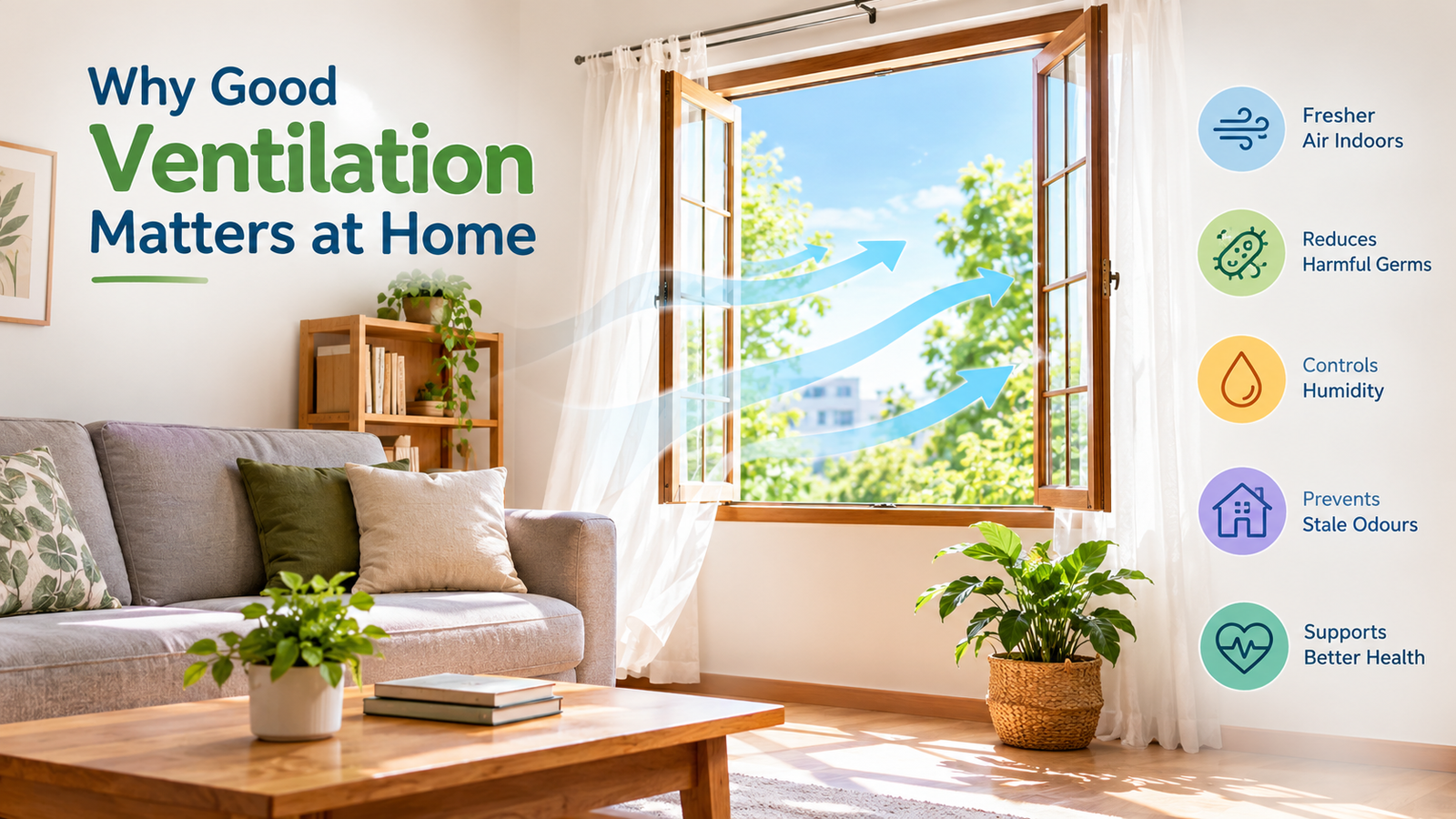
Ventilation helps exchange indoor air with outdoor air or move stale air outside. When planned carefully, it can improve comfort, control moisture, and reduce exposure to certain indoor pollutants. Understanding how ventilation works can help families create a healthier living environment.
1. What Does Home Ventilation Mean?
Ventilation is the movement of air into and out of a building. It can happen naturally through open windows, doors, and vents, or mechanically through exhaust fans and ventilation systems.
Natural ventilation depends on factors such as wind, temperature, and the design of the home. Mechanical ventilation can provide more controlled airflow, particularly in rooms where moisture or pollutants are produced.
Ventilation is not the same as air conditioning. An air conditioner may cool indoor air without bringing in fresh outdoor air, depending on its design. Similarly, an air purifier can remove certain particles but does not necessarily replace stale air with fresh air.
2. How Ventilation Can Improve Indoor Air Quality
Indoor air may contain dust, smoke, cooking emissions, cleaning-product vapours, and other pollutants. Their concentration can rise when they are released faster than they are removed.
Appropriate ventilation can dilute and carry away some indoor pollutants. For example, opening windows when outdoor air quality is good may help fresh air circulate through a room. Kitchen exhaust fans that discharge outdoors can help remove cooking fumes and excess heat.
However, ventilation does not remove every pollutant. Outdoor air can also contain dust, vehicle emissions, pollen, or smoke. The safest approach depends on the source of pollution and the conditions outside.
3. Preventing Excess Moisture and Mould
Bathing, washing clothes, cooking, and drying wet items indoors can add moisture to the air. If damp air remains trapped, condensation may develop on cool surfaces, including windows, walls, and ceilings.
Persistent dampness creates conditions that encourage mould growth. Mould can damage building materials and may trigger allergic reactions or worsen asthma symptoms in susceptible people.
Using an exhaust fan in the bathroom, ventilating the kitchen while cooking, repairing leaks, and drying wet areas promptly can help control moisture. If mould keeps returning, the underlying dampness should be identified and corrected rather than simply covering the affected surface.
4. Supporting Comfort and Everyday Well-Being
Rooms with limited airflow may feel stuffy, especially when several people occupy a small space. Heat, moisture, and odours can also linger longer when air exchange is poor.
Suitable ventilation can help remove excess heat and unpleasant smells while making indoor spaces feel fresher. It may also reduce the concentration of certain airborne contaminants.
Some indoor pollutants can cause irritation, headaches, or breathing discomfort, but these symptoms have many possible causes. Improving airflow may help in some situations, yet persistent symptoms should not automatically be blamed on poor ventilation.
5. Practical Ways to Improve Ventilation
You do not always need expensive equipment to improve airflow. A few sensible measures can make a difference.
- Use kitchen exhaust ventilation: Turn on an exhaust fan that vents outdoors when cooking, especially when frying or using gas.
- Ventilate bathrooms: Run an exhaust fan during bathing and afterwards, where available, to help remove moisture.
- Open windows strategically: When outdoor air is clean and weather conditions allow, open windows or doors to encourage fresh-air movement.
- Keep air pathways clear: Avoid blocking ventilation grilles and vents with furniture, curtains, or stored items.
- Reduce pollution at its source: Avoid smoking indoors and use cleaning products according to their labels.
- Maintain ventilation equipment: Clean exhaust fans and replace or service filters as recommended by the manufacturer.
- Monitor indoor dampness: Repair plumbing leaks, dry wet surfaces, and investigate repeated condensation.
If outdoor pollution is high, keep windows closed where practical and use suitable filtration to reduce particles indoors. Follow local air-quality guidance when deciding when to ventilate.
6. Which Homes May Need Extra Attention?
Homes with small rooms, crowded living areas, limited windows, or persistent dampness may need particular attention to airflow. Kitchens and bathrooms often require effective exhaust ventilation because cooking and washing release pollutants or moisture.
People with asthma, allergies, or other respiratory conditions may be more sensitive to some indoor pollutants. If symptoms regularly worsen at home, a healthcare professional can help assess possible causes, and a qualified building specialist may help identify ventilation or moisture problems.
Fuel-burning appliances also require proper installation and maintenance. Carbon monoxide is a dangerous gas that cannot be seen or smelled. Use appropriate carbon monoxide alarms where recommended, and never rely on opening a window as a substitute for safe appliance maintenance.
7. When to Seek Professional Help
Consider professional advice if you notice persistent mould, repeated water damage, strong unexplained odours, or condensation that continues despite basic moisture-control measures.
If household members develop persistent coughing, wheezing, or breathing difficulties, seek medical advice. If a carbon monoxide alarm sounds or anyone develops sudden headache, dizziness, nausea, or confusion alongside possible exposure to fuel-burning equipment, leave the building immediately and contact emergency services from a safe location.
Conclusion
Good home ventilation helps manage indoor pollutants, remove excess moisture, and improve comfort. Its effectiveness depends on the home’s design, the sources of pollution, and the quality of the outdoor air.
Using kitchen and bathroom exhaust fans, controlling dampness, maintaining equipment, and opening windows when conditions are suitable can support healthier indoor air. A comfortable home is not only about cleanliness; it also depends on keeping the air moving safely and appropriately.
Verification Code: V8M3K7R2X5