Introduction
The human body constantly uses nutrients, produces energy, and repairs tissues. These activities also create waste materials that must be removed to maintain normal internal conditions. If certain waste products accumulate, they can interfere with the body’s functions.
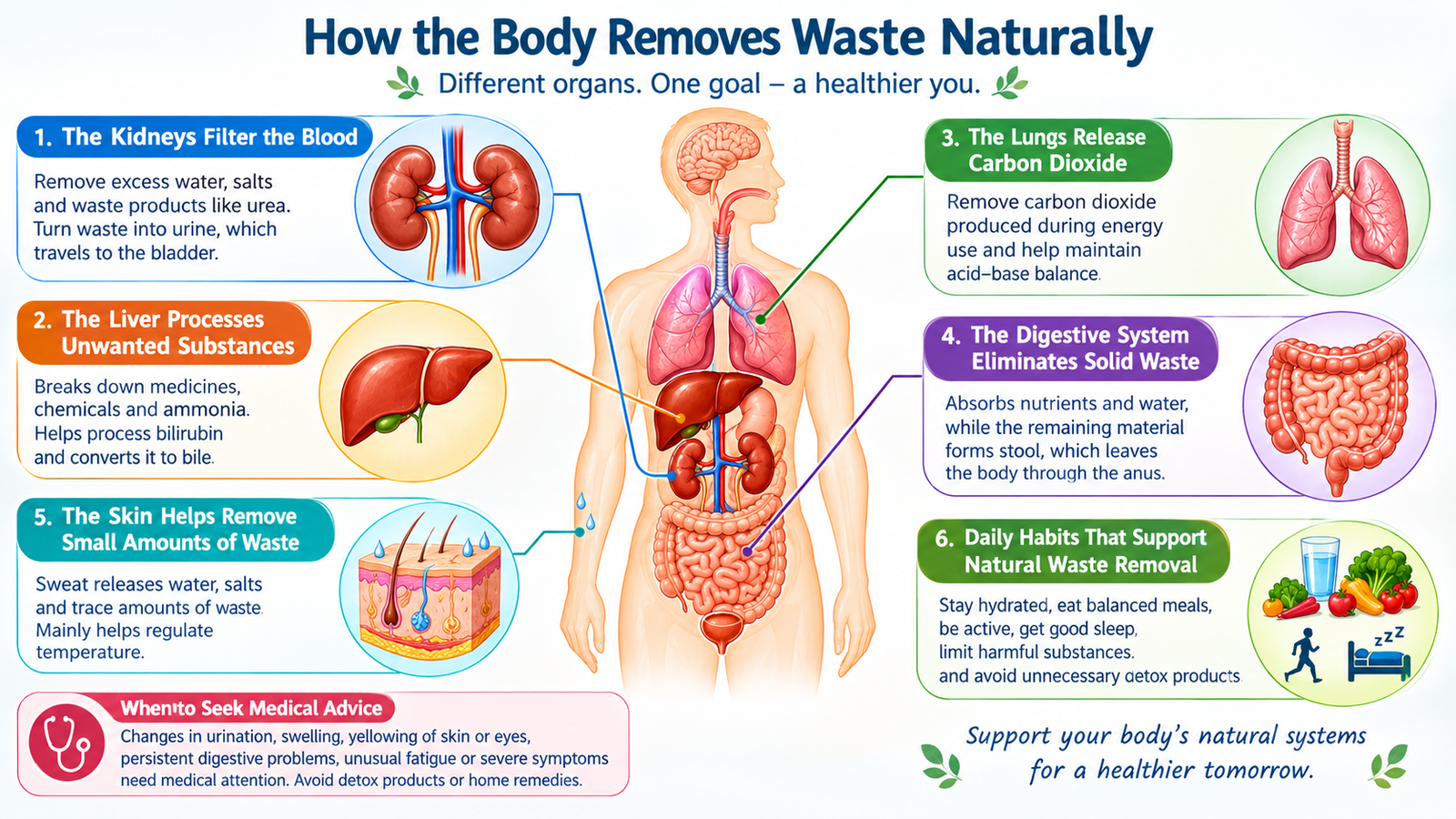
Fortunately, the body has several natural systems that work together to manage this process. The kidneys filter the blood, the liver processes substances, the lungs release carbon dioxide, and the digestive system eliminates undigested material. Each system has a different responsibility, but all contribute to maintaining the body’s internal balance.
1. The Kidneys Filter the Blood
The kidneys are two bean-shaped organs located towards the back of the abdomen. They continuously filter the blood, removing excess water, salts, and waste products such as urea. Urea forms when the body breaks down proteins.
Inside each kidney are tiny filtering units called nephrons. These structures separate substances from the blood, return useful materials to circulation, and help regulate the amount of water and electrolytes retained by the body.
The remaining fluid becomes urine, which travels through the ureters to the bladder. When the bladder fills, urine leaves the body through the urethra.
Drinking enough water supports normal kidney function, although individual fluid needs vary. Excessive water intake is not necessary and may be harmful in certain circumstances.
2. The Liver Processes Unwanted Substances
The liver performs several important jobs related to waste management. It processes nutrients absorbed from food, breaks down certain medicines and chemicals, and converts ammonia produced during protein breakdown into urea. The kidneys can then remove much of this urea through urine.
The liver also helps process bilirubin, a yellow substance produced when old red blood cells are broken down. Bilirubin is released into bile and normally leaves the body mainly through bowel movements.
Although the liver helps handle many substances, it is not a magical cleansing organ that can instantly remove every harmful chemical. Some substances require medical treatment when exposure or accumulation becomes dangerous.
3. The Lungs Release Carbon Dioxide
Every time cells use nutrients to produce energy, they generate carbon dioxide as a waste product. This gas enters the bloodstream and travels to the lungs.
During exhalation, carbon dioxide passes from the blood into the tiny air sacs of the lungs and leaves the body with the outgoing breath.
The lungs also help regulate the body’s acid–base balance by controlling how much carbon dioxide is removed. This process happens automatically, even during sleep.
Healthy breathing and circulation allow this exchange to occur efficiently. Persistent breathing difficulties should be medically assessed rather than treated with unproven detox methods.
4. The Digestive System Eliminates Solid Waste
Food provides nutrients, but not every part of what we eat can be digested or absorbed. Material that remains moves through the large intestine, where water and some electrolytes are absorbed.
Gut bacteria also break down certain substances, including some types of dietary fibre. The remaining material forms stool, which is stored in the rectum until it is passed through the anus.
Regular bowel movements vary from person to person. Eating fibre-rich foods, drinking appropriate amounts of fluid, staying active, and responding to the urge to use the toilet can help support bowel regularity.
Persistent constipation, blood in the stool, severe abdominal pain, or an unexplained change in bowel habits should be discussed with a healthcare professional.
5. The Skin Helps Remove Small Amounts of Waste
Sweat glands release fluid containing water and small quantities of salts and other substances. Sweating mainly helps regulate body temperature, especially during exercise or in hot weather.
Although sweat contains trace amounts of certain waste products, the skin is not a major route for removing metabolic waste. The kidneys and liver perform most of the body’s processing and elimination work, while the lungs remove carbon dioxide.
Saunas and intense sweating should therefore not be considered substitutes for normal organ function or medical treatment. Excessive sweating can cause fluid loss, particularly in hot conditions.
6. Daily Habits That Support Natural Waste Removal
The body’s waste-removal systems usually function without special cleanses or detox products. Healthy everyday habits can help them work properly.
- Drink fluids according to your needs: Water supports circulation, kidney function, and normal stool consistency.
- Choose balanced meals: Vegetables, fruits, whole grains, and suitable protein sources provide nutrients and fibre.
- Stay physically active: Regular movement supports general health and can help bowel function.
- Limit harmful substances: Avoid smoking and use medicines only as directed. Alcohol can damage the liver when consumed excessively.
- Get sufficient sleep: Consistent sleep supports normal body regulation and overall well-being.
- Be cautious with detox products: Special teas, cleanses, and supplements are not routinely needed to remove waste and may cause side effects.
People with kidney, heart, or liver conditions may need specific fluid or dietary guidance from their healthcare team.
7. When to Seek Medical Advice
Changes in urination, persistent swelling, yellowing of the skin or eyes, ongoing digestive problems, or unusual fatigue may sometimes signal an underlying health issue.
Seek medical advice if these symptoms persist or worsen. Severe abdominal pain, vomiting blood, difficulty breathing, or an inability to pass urine requires urgent medical assessment.
The appropriate response depends on the cause of the symptoms, so avoid relying on detox products or home remedies to treat a suspected medical problem.
Conclusion
Waste removal is a coordinated process involving several organs. The kidneys filter the blood, the liver processes substances, the lungs release carbon dioxide, the digestive system passes solid waste, and the skin contributes mainly through temperature-regulating sweat.
Rather than forcing the body to undergo special cleansing routines, support its normal functions through balanced nutrition, appropriate hydration, physical activity, and timely medical care. These everyday choices help maintain the systems that keep the body’s internal environment stable.
Verification Code: N8R4K7X2M5