Introduction
Your body has a network that works alongside the bloodstream but follows a different route. This network collects excess fluid from tissues, transports it through small vessels, and helps the immune system recognize unwanted substances. It is called the lymphatic system.
Although it often receives less attention than the heart or lungs, this system contributes to fluid balance, immune defence, and the absorption of certain nutrients from food. Its work continues quietly throughout the day, helping different parts of the body function together.
Understanding the lymphatic system can also explain why lymph nodes sometimes become swollen during an infection and why persistent swelling deserves medical attention.
1. What Makes Up the Lymphatic System?
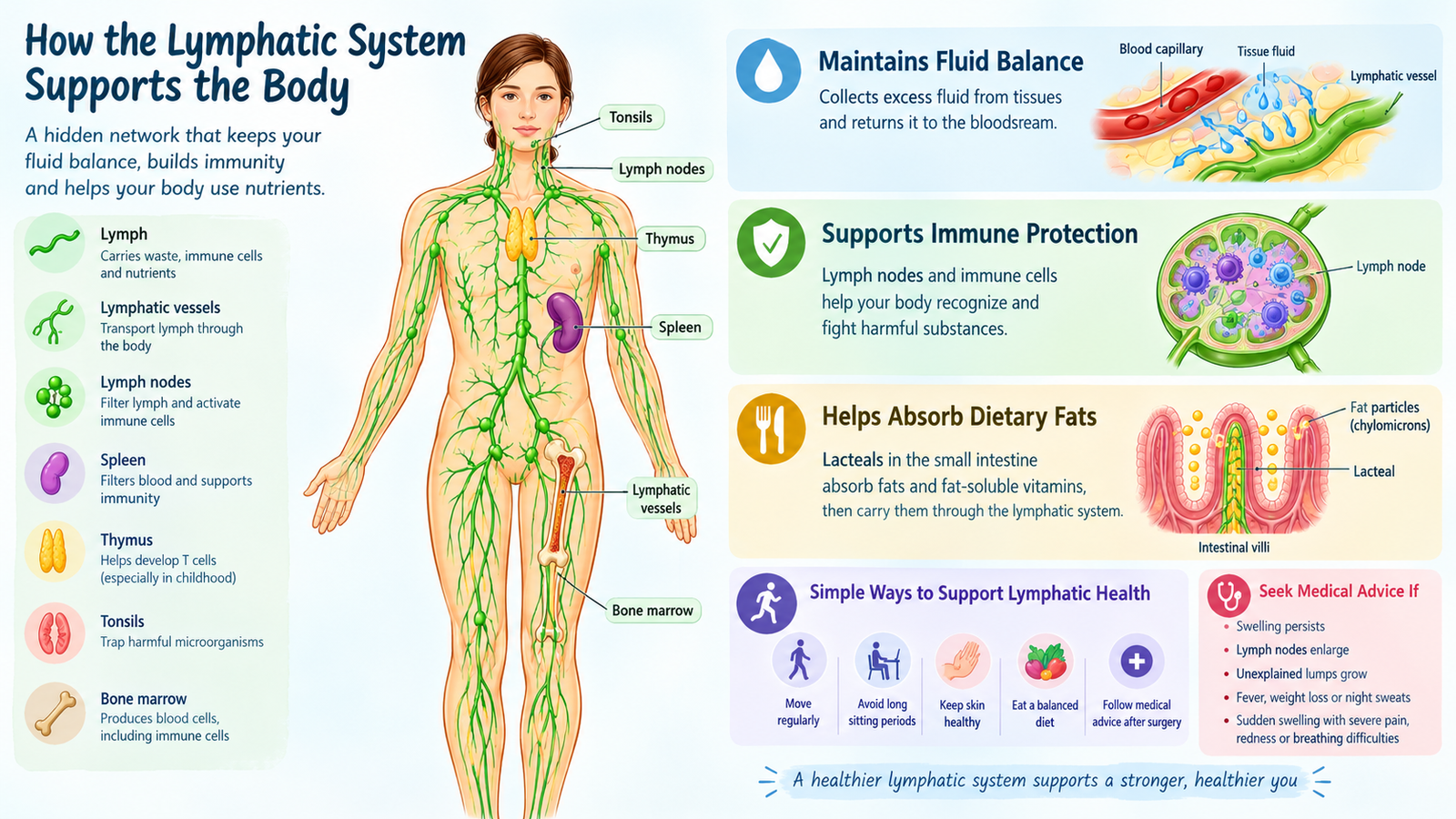
The lymphatic system consists of lymph, lymphatic vessels, lymph nodes, and several organs and tissues involved in immune function.
Lymph is a fluid formed from fluid collected from body tissues. It can contain water, proteins, immune cells, and other substances.
Lymphatic vessels carry this fluid through a branching network toward larger ducts that eventually return it to the bloodstream.
Lymph nodes are small structures positioned along lymphatic vessels. They contain immune cells that examine material carried in the lymph.
Other important parts include the spleen, thymus, tonsils, and bone marrow. Each contributes to immune function in a different way.
Together, these structures help maintain the body’s internal balance and support its protective responses.
2. How the Lymphatic System Controls Fluid Balance
Blood delivers oxygen and nutrients to tissues through tiny vessels called capillaries. Some fluid moves from these vessels into the surrounding spaces, supplying nearby cells.
Not all of this fluid returns directly to the blood circulation. The lymphatic system collects much of the remaining excess fluid and returns it to the bloodstream.
Without this drainage process, fluid could accumulate in tissues and cause swelling.
When lymphatic vessels become damaged, blocked, or unable to transport fluid effectively, a condition called lymphedema may develop. It can cause persistent swelling, often affecting an arm or leg, although other areas can also be involved.
Lymphedema has several possible causes, including certain cancer treatments, surgery, and abnormalities present from birth. Persistent swelling should be assessed rather than automatically attributed to poor circulation.
3. Why Lymph Nodes Matter During Infections
Have you ever noticed a tender lump beneath your jaw or along your neck during a sore throat? It may be an enlarged lymph node.
Lymph nodes act as meeting points for immune cells. As lymph passes through them, immune cells can encounter microorganisms, foreign material, and signals associated with infection.
This process helps activate suitable immune responses.
When the body fights an infection, immune cells inside a lymph node may multiply, causing the node to enlarge. Swelling can occur near the affected area, such as in the neck during certain throat infections.
However, enlarged lymph nodes do not always indicate infection. Other conditions can also cause them to grow, so persistent, hard, or progressively enlarging lumps should be medically evaluated.
4. The Lymphatic System and Immune Protection
The lymphatic system supports the body’s defence by transporting immune cells and helping them communicate.
Lymph nodes provide an environment where certain immune cells can recognize specific threats and coordinate responses. B cells may produce antibodies, while T cells help organize immune activity or destroy infected cells.
The spleen performs a related but different role. It filters blood rather than lymph, helps remove old or damaged blood cells, and contributes to immune responses against substances circulating in the bloodstream.
The thymus is especially important during childhood because it supports the development of T cells. Bone marrow produces blood cells, including the precursors of many immune cells.
These structures work together, creating a connected defence network rather than operating as separate systems.
5. How the Lymphatic System Helps Absorb Fat
The lymphatic system also participates in digestion.
Inside the small intestine are tiny projections called villi. Within many villi are specialized lymphatic vessels known as lacteals.
After a meal containing fat, much of the absorbed dietary fat is packaged into particles called chylomicrons. These particles enter the lacteals and travel through lymphatic vessels before reaching the bloodstream.
This route allows many dietary fats and fat-soluble vitamins to enter circulation.
The lymphatic system therefore contributes not only to immune protection and fluid management but also to the body’s use of nutrients from food.
6. Everyday Ways to Support Lymphatic Health
The lymphatic system does not have a central pump like the heart. The movement of surrounding muscles, breathing, and the structure of lymphatic vessels help move lymph forward.
Several everyday habits can support general lymphatic and cardiovascular health.
Move regularly: Walking, cycling, and other suitable activities encourage muscle movement, which helps lymph flow.
Avoid sitting still for too long: Take movement breaks during extended periods of sitting, especially if your daily routine involves desk work.
Maintain healthy skin: Clean minor cuts, protect damaged skin, and seek appropriate care for wounds to reduce the risk of infection.
Eat a balanced diet: Include vegetables, fruits, whole grains, protein sources, and healthy fats to support overall health.
Follow medical advice after surgery: People at risk of lymphedema may benefit from individualized guidance about exercise, skin care, and swelling management.
There is no reliable evidence that commercial detox drinks or special cleanses are necessary to remove toxins through the lymphatic system. The body already has established mechanisms involving the liver, kidneys, lungs, and other organs to process and eliminate waste.
7. When Should You Seek Medical Advice?
Consult a healthcare professional if you notice swelling that persists, unexplained enlargement of lymph nodes, or a lump that continues to grow.
Medical assessment is particularly important when swelling occurs with fever, unexplained weight loss, night sweats, or ongoing fatigue.
Seek urgent medical attention if swelling develops suddenly with severe pain, redness, warmth, or breathing difficulties.
The appropriate evaluation depends on the location, duration, associated symptoms, and medical history. A healthcare professional can determine whether examination, blood tests, imaging, or other investigations are needed.
Conclusion
The lymphatic system performs several essential jobs that are easy to overlook. It returns excess tissue fluid to the bloodstream, supports immune responses, filters lymph through lymph nodes, and helps transport absorbed dietary fats.
Its effectiveness depends on the coordinated work of vessels, organs, and immune cells. Regular movement, good skin care, balanced nutrition, and timely medical attention for unusual swelling can support overall health.
Recognizing the importance of this network provides a clearer understanding of how the body maintains fluid balance and defends itself against disease.
Verification Code: L8Q4N7X2P5