Introduction
Going to the toilet is an ordinary part of digestion, but bowel habits can change when everyday routines change. A person may suddenly notice that stools are harder, bathroom visits require more effort, or several days pass without the usual bowel movement.
Constipation can be temporary and may improve when the factors affecting bowel function are addressed. Food choices, drinking habits, physical activity, toilet routines, medicines, and certain health conditions can all have an influence.
What Does Constipation Feel Like?
Constipation is not defined only by how many times someone uses the toilet. A person can have relatively regular bowel movements and still experience constipation if the stool is difficult to pass or the bowel feels only partly emptied.
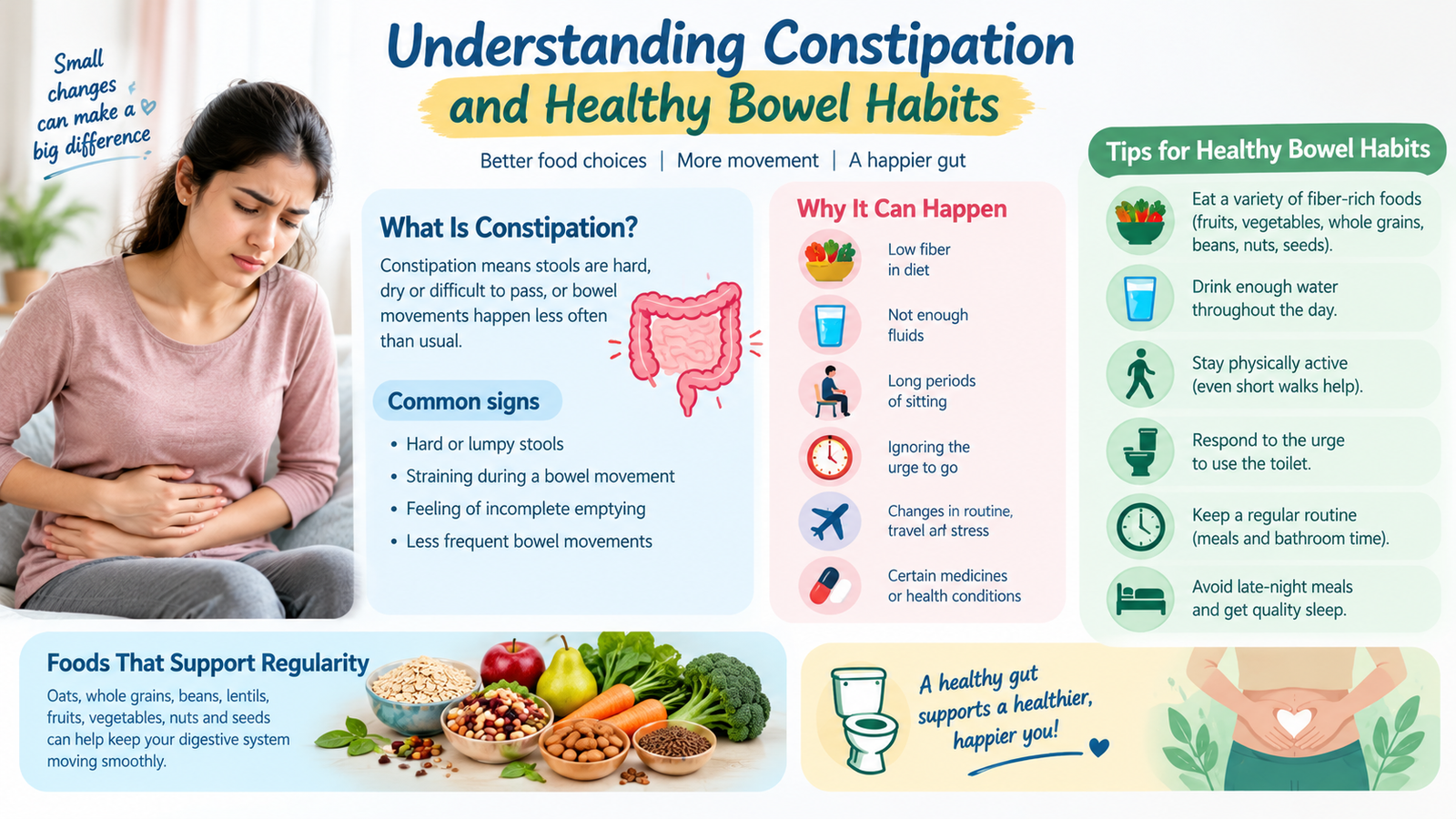
Possible signs include:
- Stool that is unusually dry or firm
- Needing considerable effort to pass stool
- A feeling that more stool remains after using the toilet
- A noticeable reduction in a person’s usual bowel frequency
- Discomfort associated with passing stool
Everyone has a different normal bowel pattern. A change from your usual pattern is often more meaningful than comparing yourself with someone else.
Why Can Bowel Movements Become Difficult?
Your Meals May Lack Enough Fiber
Fiber travels through the digestive system without being completely broken down. It contributes to the material that eventually becomes stool.
Foods such as vegetables, fruits, beans, lentils, whole grains, nuts, and seeds can provide fiber. If these foods are rarely included in meals, bowel movements may become harder for some people.
A gradual increase is usually easier to tolerate than suddenly adding large amounts of fiber.
Your Fluid Intake May Be Low
Water is part of normal stool formation. When daily fluid intake is insufficient, stool can become firmer and more difficult to move.
There is no identical water requirement for everyone. Weather, exercise, diet, age, and individual health circumstances can all influence fluid needs.
Your Day May Involve Very Little Movement
The digestive system does not work independently of the rest of the body. Regular physical activity supports normal body functions, while spending most of the day inactive may contribute to sluggish bowel habits in some people.
You do not necessarily need an intense workout. Walking, stretching, household chores, and other regular movement can help reduce long periods of inactivity.
You May Be Postponing the Toilet
Sometimes people ignore the urge to use the bathroom because they are busy, travelling, working, or simply do not have convenient access to a toilet.
Doing this repeatedly may interfere with the body’s normal bowel routine. When possible, responding to the urge instead of continually postponing it can be helpful.
Your Routine May Have Changed
A different sleep schedule, unfamiliar surroundings, travel, emotional stress, altered eating times, or reduced activity can affect bowel habits.
Constipation can also occur as a side effect of some medicines or alongside certain medical conditions. Persistent constipation therefore deserves more attention than simply assuming that a particular food is responsible.
Everyday Foods That Can Add Fiber
Instead of depending on a single food as a quick solution, try creating meals that contain several sources of plant-based fiber.
You could include:
- Oats or other whole grains
- Lentils, chickpeas, beans, or peas
- Fresh fruits
- Vegetables of different varieties
- Nuts and seeds
When increasing fiber, make the change gradually. A sudden dietary increase may leave some people feeling unusually gassy or bloated.
Create a More Relaxed Toilet Routine
The bathroom should not become a place where you repeatedly rush or strain. Give yourself enough time to respond naturally to the urge.
Some people find it useful to sit on the toilet at a similar time each day. After a meal can be a convenient opportunity because eating can stimulate movement within the digestive tract.
Your sitting position can also affect comfort. Placing the feet on a low support can raise the knees slightly and may make passing stool easier for some people.
The purpose of a toilet routine is to encourage relaxation, not to force a bowel movement.
Small Habits That Can Make a Difference
A healthy bowel routine can be supported by several simple practices:
- Add different fiber-rich foods to regular meals.
- Keep fluids available throughout the day.
- Break up long periods of sitting with movement.
- Avoid repeatedly ignoring the urge to pass stool.
- Keep eating and sleeping patterns reasonably consistent.
- Pay attention to bowel changes after starting a new medicine.
- Notice whether travel or stressful periods affect your digestion.
A brief personal record can sometimes be useful. Writing down meals, drinks, activity, and bowel changes for a few days may reveal a connection that is difficult to remember otherwise.
When Should You Speak With a Doctor?
Constipation that does not settle, keeps returning, or begins interfering with normal activities should be medically assessed.
Extra caution is needed when constipation occurs together with blood in the stool, unexplained weight loss, persistent or severe abdominal pain, repeated vomiting, fever, or a sudden and unusual change in bowel habits.
If you believe a prescribed medicine is making constipation worse, discuss it with a healthcare professional rather than stopping the medicine without advice.
Conclusion
Healthy bowel habits are usually the result of several ordinary routines working together. Food containing enough fiber, appropriate fluid intake, regular movement, and responding to the body’s toilet signals can all support comfortable bowel function.
There is no requirement for everyone to have a bowel movement at exactly the same frequency. What matters is understanding your own usual pattern and paying attention when it changes.
If constipation becomes persistent or is accompanied by concerning symptoms, finding the underlying reason is more important than repeatedly trying random home remedies.
Verification Code
ZX6P8RN43QT