Introduction
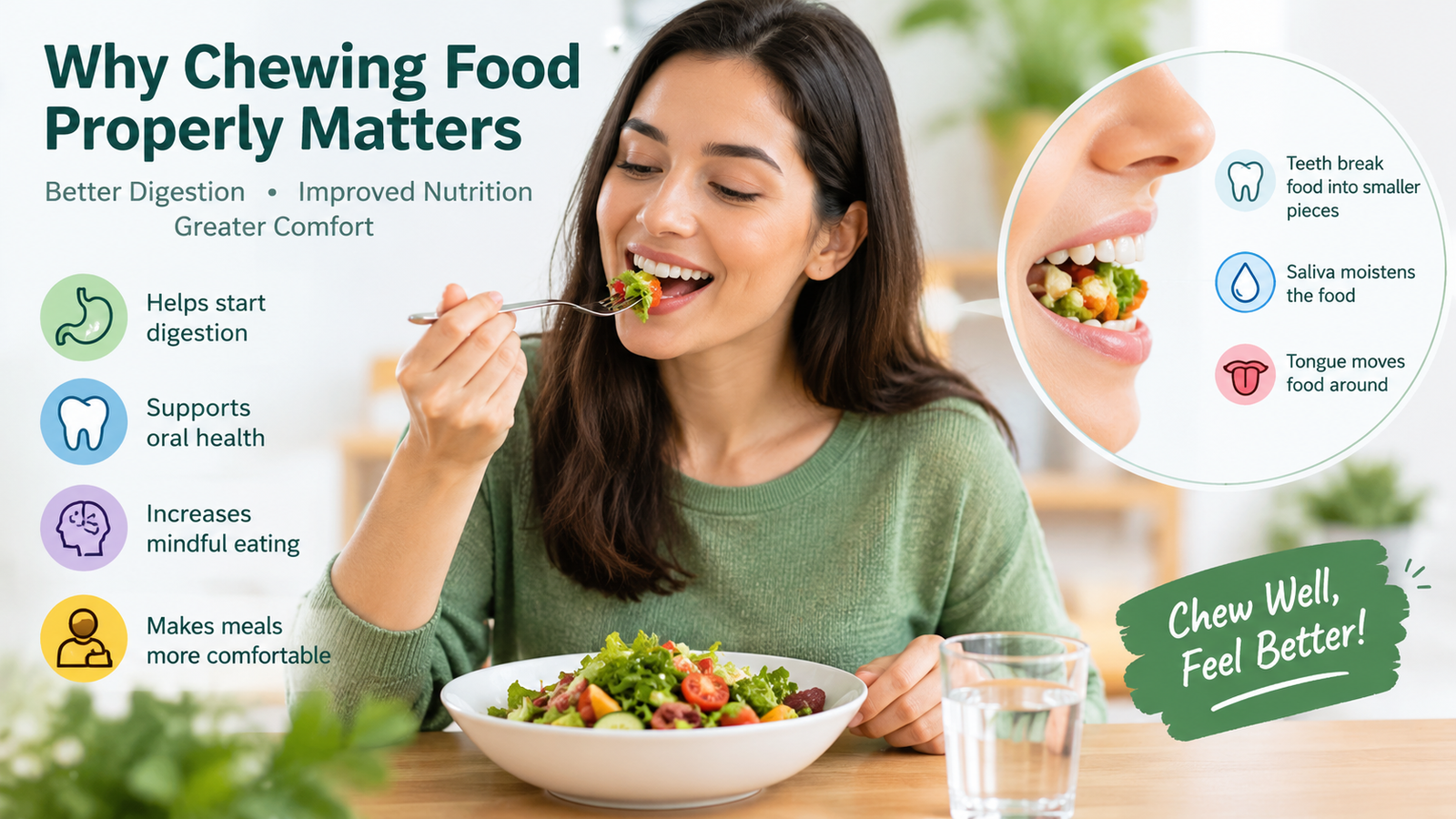
Eating is more than simply putting food into the mouth and swallowing it. The first stage of digestion begins while food is still in the mouth. Chewing breaks larger pieces into smaller portions, mixes food with saliva, and prepares it for the next stages of digestion.
The speed and quality of chewing can also influence how comfortably a person eats. Taking enough time with each bite may make meals easier to manage and can encourage more mindful eating.
What Happens When You Chew?
Teeth perform different jobs as food is processed. Some teeth cut food, while others crush and grind it. The tongue continually moves the food around the mouth so that it can be worked on from different sides.
At the same time, saliva moistens the food. This helps turn a dry or solid bite into a softer mass that can be moved toward the throat more easily.
Chewing Helps Prepare Food for Digestion
Food needs to be broken down before the body can process its nutrients. Thorough chewing does not complete digestion, but it helps create smaller food particles and mixes them with saliva before they reach the stomach.
This gives the digestive system food that has already undergone some mechanical processing in the mouth.
Taking Time With Each Bite Can Support Comfortable Eating
Swallowing very large pieces of food can make eating less comfortable. Careful chewing gives the mouth more time to soften and break down the bite.
People who eat quickly may also take less time to notice the texture and size of each mouthful. Slowing down can make the eating process more deliberate.
Chewing and Mindful Eating
Chewing slowly can make it easier to pay attention to the meal. Texture, flavor, temperature, and changes in fullness may become more noticeable when eating is not rushed.
This does not mean that everyone needs to chew a specific number of times. Food textures differ, and the amount of chewing required depends on what is being eaten.
What Can Happen When Food Is Swallowed Too Quickly?
Rushing through meals may mean that food is swallowed before it has been adequately broken down. Large or poorly chewed pieces can be harder to manage comfortably.
Eating quickly may also encourage larger bites and less awareness of the meal. For some people, this can contribute to an uncomfortable feeling of being overly full after eating.
Simple Habits for Better Chewing
A few practical habits can make meals more relaxed:
- Take a manageable amount of food at a time.
- Keep your attention on the bite instead of rushing to the next one.
- Chew until the food has become sufficiently soft and easy to swallow.
- Give yourself enough time to finish meals without unnecessary hurry.
- Choose food textures that are comfortable for you.
- Avoid talking or laughing while food is being chewed or swallowed.
Healthy Teeth Make Chewing Easier
Teeth play an essential role in breaking food apart. Cavities, damaged teeth, missing teeth, gum problems, or poorly fitting dental appliances can make chewing uncomfortable or difficult.
Regular dental care can help identify problems that interfere with normal eating. Persistent pain while chewing should not simply be ignored.
When Chewing Becomes Difficult
Difficulty chewing can have different causes. Tooth problems, jaw discomfort, dental changes, mouth sores, or other conditions may affect a person’s ability to eat comfortably.
If chewing repeatedly causes pain, the jaw frequently becomes uncomfortable, or certain foods are consistently difficult to manage, discussing the problem with a dentist or healthcare professional can help identify the underlying cause.
A Small Eating Habit With an Important Role
Chewing may seem like an ordinary part of eating, but it prepares food for the digestive process and helps make swallowing more manageable. Giving each bite enough attention can also encourage a calmer and more aware approach to meals.
There is no universal number of chews that everyone needs. Instead, focus on eating at a comfortable pace and chewing food until it is adequately broken down before swallowing.
Conclusion
Proper chewing is an important first step in the journey food takes through the digestive system. It reduces the size of food particles, combines food with saliva, and prepares each bite for swallowing.
Making time to chew carefully, choosing manageable bites, and maintaining good oral health are simple habits that can support comfortable eating and better awareness during meals.