Introduction
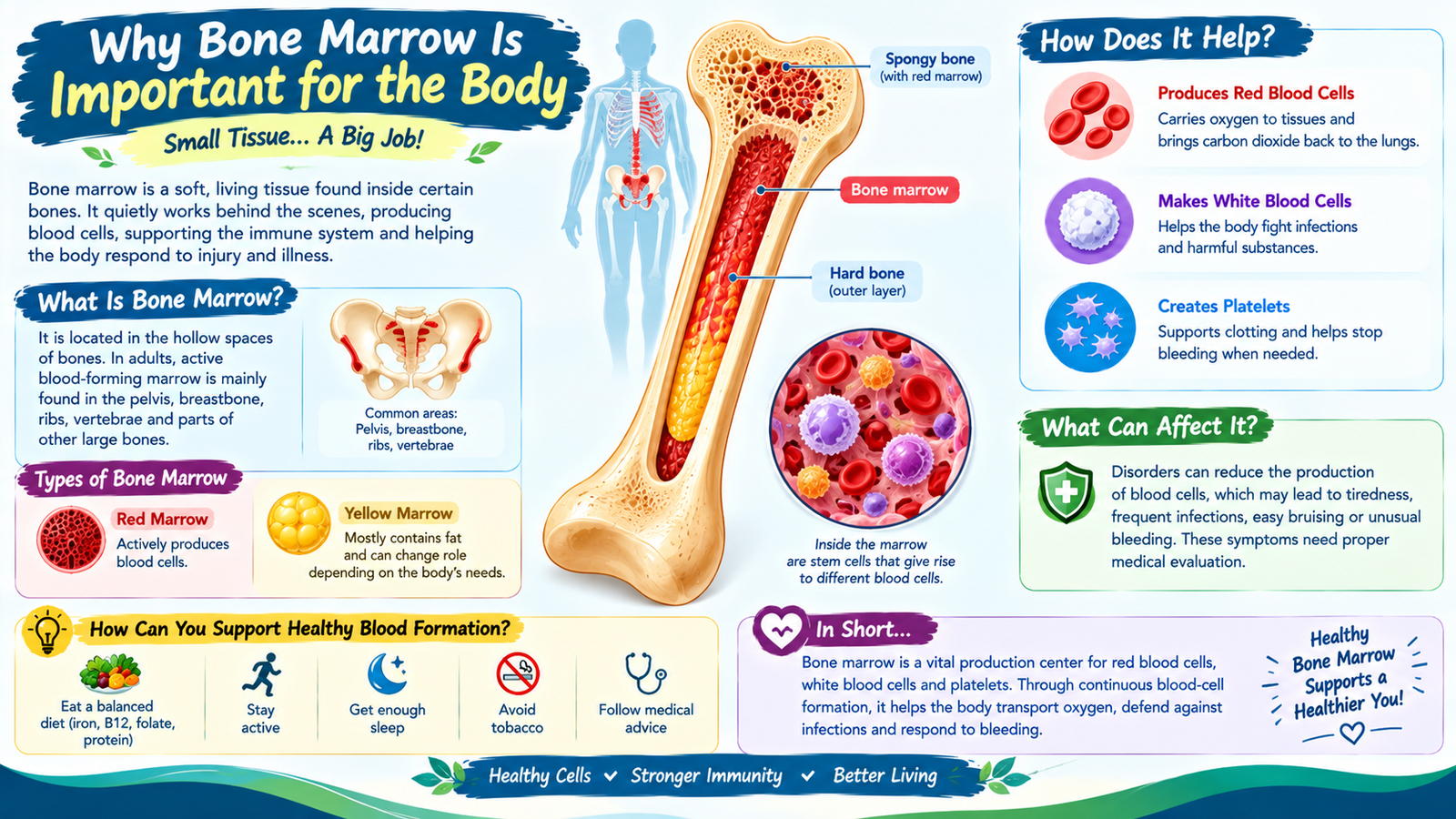
Bone marrow is a soft, living tissue found inside certain bones. Although it is hidden beneath the hard outer layer of bone, it performs an essential job every day: helping the body produce many of the blood cells needed for normal life. It also plays an important part in the immune system and the body’s response to injury.
What Is Bone Marrow?
Bone marrow is a soft substance located in the hollow spaces of bones. In adults, active blood-forming marrow is mainly found in areas such as the pelvis, breastbone, ribs, vertebrae, and parts of some other large bones.
There are two main types of marrow. Red bone marrow is actively involved in producing blood cells, while yellow bone marrow contains a larger amount of fat and can have a different role depending on the body’s needs.
How Does Bone Marrow Help the Body?
1. Produces Red Blood Cells
Red blood cells carry oxygen from the lungs to tissues throughout the body and help transport carbon dioxide back toward the lungs. Bone marrow continually produces new red blood cells to replace older cells that have reached the end of their normal lifespan.
2. Makes White Blood Cells
Bone marrow also produces several types of white blood cells. These cells form an important part of the body’s defense system and help identify or respond to infections and other harmful substances.
Different white blood cells perform different tasks, so maintaining healthy blood-cell production is important for normal immune function.
3. Creates Platelets
Platelets are small blood components that help control bleeding. When a blood vessel is damaged, platelets participate in forming a clot at the affected area.
Bone marrow produces platelets from large cells called megakaryocytes. This ongoing production helps the body maintain an adequate supply for everyday repair and injury responses.
Bone Marrow and Blood Cell Renewal
Blood cells do not remain in circulation forever. Each type has its own lifespan, and older cells are gradually removed from the bloodstream.
To keep the blood supply balanced, the body needs a reliable system for making replacements. Bone marrow acts as one of the major sites where this continuous renewal takes place.
At the center of this process are hematopoietic stem cells. These special cells can develop into different blood-cell types according to the body’s requirements.
What Can Happen When Bone Marrow Is Affected?
Because bone marrow is responsible for producing several important blood components, disorders affecting it can influence more than one part of the body.
Depending on the condition, a person may develop problems such as low red blood cell levels, reduced numbers of certain white blood cells, or insufficient platelets. Possible effects can include tiredness, frequent infections, easy bruising, or unusual bleeding.
These symptoms are not specific to bone marrow disorders and can occur for many other reasons. Proper medical evaluation is needed to identify the underlying cause.
How Can You Support Healthy Blood Formation?
Bone marrow health is connected to overall nutrition and general health. Eating a varied diet that supplies nutrients such as iron, vitamin B12, folate, and protein can support normal blood-cell production.
Regular physical activity, adequate sleep, avoiding tobacco, and following appropriate medical advice can also contribute to overall well-being.
People with persistent fatigue, repeated infections, unexplained bruising, or unusual bleeding should discuss these symptoms with a healthcare professional rather than attempting to diagnose the cause themselves.
Conclusion
Bone marrow is much more than soft tissue inside the bones. It serves as a vital production center for red blood cells, white blood cells, and platelets. Through continuous blood-cell formation, it helps the body transport oxygen, defend against infections, and respond to bleeding.
Understanding its role highlights why healthy blood production is essential for keeping many body systems functioning properly.
Verification Code: BM7Q4XK92LP