Introduction
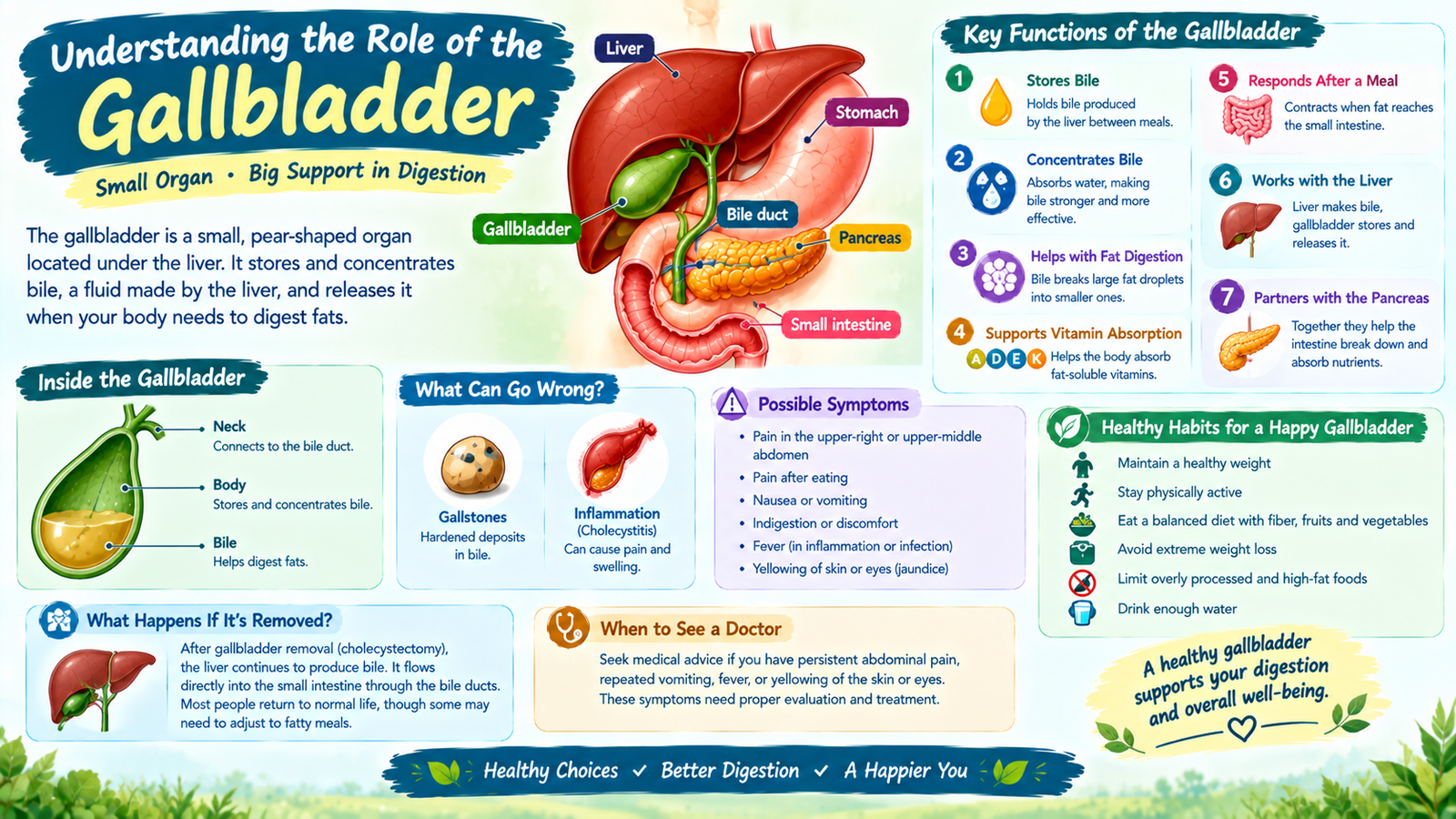
The gallbladder may be small, but it has an important supporting role in digestion. Hidden beneath the liver, this pear-shaped organ acts as a storage place for bile. When a meal contains fat, the gallbladder helps deliver bile into the digestive tract so the body can process that fat more effectively.
Where Is the Gallbladder?
The gallbladder sits underneath the liver in the upper-right area of the abdomen. It is connected to a network of small tubes called bile ducts. These ducts provide a pathway through which bile can move from the liver and gallbladder toward the intestine.
Unlike the gallbladder, the liver continuously produces bile. The gallbladder mainly stores and prepares this fluid until it is needed.
What Does the Gallbladder Do?
1. Keeps Bile Ready for Use
Bile is produced by the liver and contains substances that assist with the digestion of dietary fats. Rather than sending all of this bile directly into the intestine immediately, the body can keep some of it in the gallbladder between meals.
2. Makes Stored Bile More Concentrated
While bile remains inside the gallbladder, some of its water content is absorbed. This allows the stored bile to become more concentrated before it is released during digestion.
3. Helps the Body Handle Dietary Fat
After eating, especially when a meal contains fat, the digestive system signals the gallbladder to contract. Bile then enters the small intestine. Its bile salts help break large fat droplets into smaller ones, making it easier for digestive enzymes to work on them.
4. Assists With Certain Vitamin Absorption
Efficient fat digestion also matters for the absorption of vitamins that dissolve in fat. These include vitamins A, D, E, and K. Bile therefore contributes indirectly to the body’s ability to absorb these nutrients from food.
5. Works as Part of a Larger Digestive System
The gallbladder does not work independently. The liver makes bile, the gallbladder stores and releases it, and the pancreas supplies digestive enzymes. The small intestine brings these substances together to continue the digestive process.
What Can Affect the Gallbladder?
Gallstones are one of the better-known gallbladder problems. They are hardened particles that can develop from substances present in bile. Some people have gallstones without noticeable symptoms, while others may experience discomfort if a stone interferes with normal bile flow.
Inflammation of the gallbladder, known as cholecystitis, is another condition that may cause significant symptoms.
Possible warning signs can include:
- Pain in the upper-right or upper-middle abdomen
- Discomfort that may appear after eating
- Nausea or vomiting
- Fever
- Indigestion or abdominal discomfort
- Yellowing of the skin or eyes in some cases
These symptoms can have several possible causes, so they should not automatically be assumed to indicate a gallbladder disorder.
Can Gallbladder Problems Be Prevented?
There is no single food or routine that guarantees protection from gallbladder disease. However, general healthy habits can support digestive and overall health.
Eating a varied diet, staying physically active, and maintaining a healthy weight are useful foundations. Very rapid weight loss and extreme dieting may increase the likelihood of developing gallstones, so gradual and sustainable changes are generally preferable.
What Happens If the Gallbladder Is Removed?
Some people require an operation called a cholecystectomy, in which the gallbladder is removed. This does not stop the liver from making bile.
After removal, bile travels from the liver through the bile ducts into the small intestine rather than being stored in the gallbladder. Many people eventually return to their usual eating pattern, although temporary changes in digestion can occur.
When Should You Seek Medical Advice?
Persistent or severe abdominal pain deserves medical attention, particularly when it occurs with vomiting, fever, or yellowing of the skin or eyes. A healthcare professional may use a physical examination, blood tests, ultrasound, or other investigations to determine the cause.
Conclusion
The gallbladder is a small storage organ that helps coordinate the delivery of bile when the digestive system needs it. By storing and concentrating bile and releasing it after meals, it supports the digestion of fats and the absorption of fat-soluble vitamins. Understanding its role can also make it easier to recognize symptoms that may need medical evaluation.
Verification Code: QG7M4XK82LP