Introduction
Moving comfortably is an important part of staying active. Flexibility describes the amount of movement available around a joint, and maintaining it can make everyday actions such as putting on clothes, reaching for objects, climbing stairs, or turning the body easier.
You do not need a gym membership or special machines to work on flexibility. A few gentle movements at home can be enough to encourage better mobility when practiced consistently and within a comfortable range.
What Makes Flexibility Important?
When the body becomes accustomed to sitting for long periods or repeating the same movements, certain areas may feel stiff. Gentle mobility and stretching exercises can help keep different parts of the body moving.
Flexibility training can also complement activities such as walking, cycling, swimming, strength training, and recreational sports. It should be approached gradually rather than as a competition to see how far the body can bend.
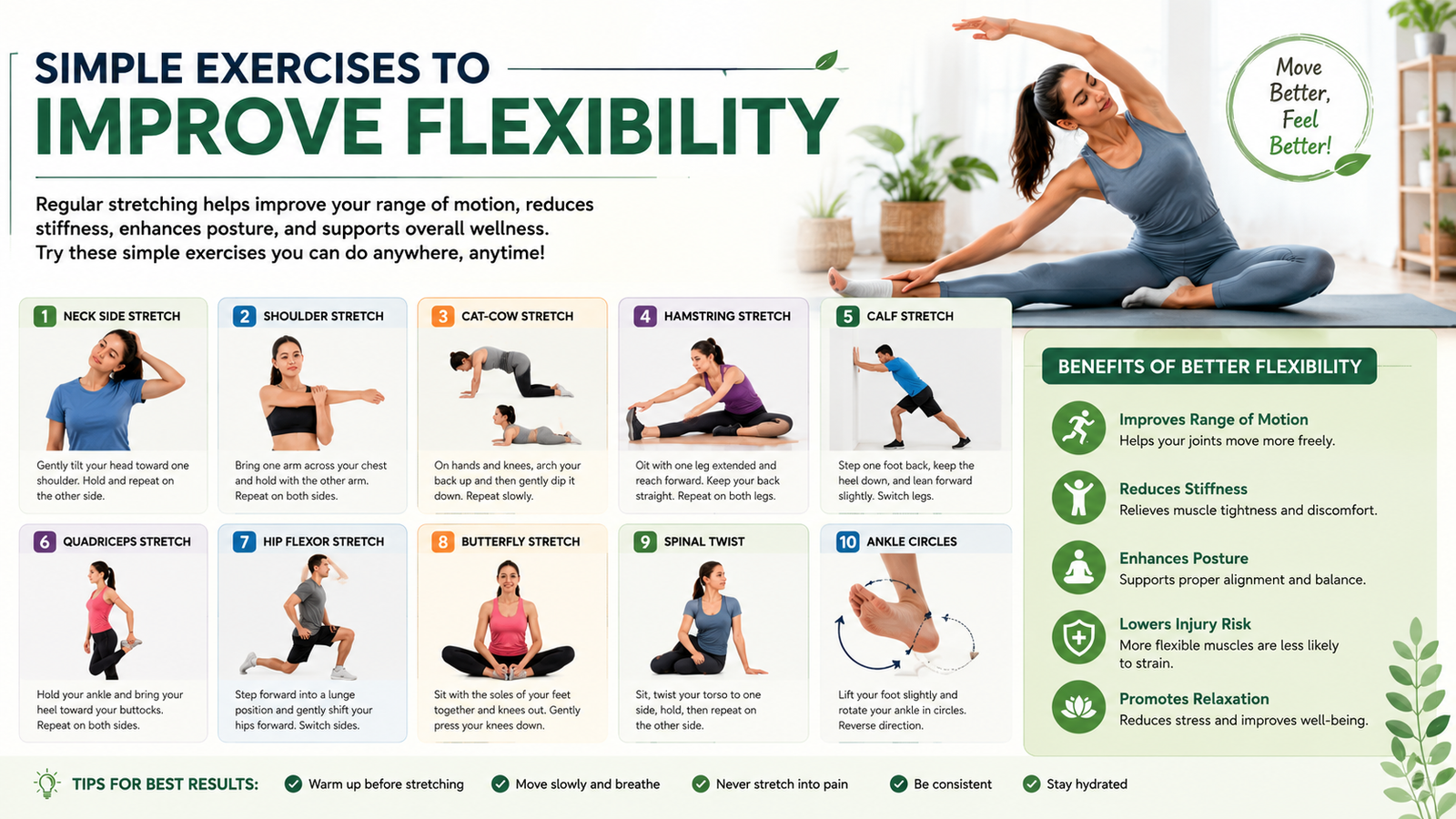
1. Gentle Shoulder Circles
Stand or sit with your back comfortable and your arms relaxed. Slowly move your shoulders upward, backward, downward, and forward to create a smooth circle.
After several repetitions, change the direction. Keep the movement controlled and avoid making large circles if your shoulders feel uncomfortable.
2. Chest Opening Movement
Stand upright and place your hands behind your back if this feels comfortable. Gently move your shoulders backward while opening the chest.
Hold the position briefly, breathe normally, and then relax. This can be a useful movement after spending considerable time at a desk.
3. Upper-Body Side Reach
Stand with your feet comfortably apart. Raise one hand above your head and slowly reach toward the opposite side.
Return to the center and perform the same movement on the other side. Keep both feet grounded and avoid twisting or forcing the torso.
4. Seated Leg Reach
Sit on the floor with both legs extended in front of you, or bend your knees slightly if necessary. Keep your spine in a comfortable position and slowly reach your hands toward your legs.
There is no need to touch your toes. Stop at the point where you notice a mild stretch and maintain steady breathing.
5. Heel-and-Toe Calf Stretch
Stand facing a wall and place your hands on it for balance. Move one foot behind the other and keep the rear heel down. Slowly shift your weight forward until you notice a gentle sensation in the lower leg.
Return to the starting position and change sides. Keep the rear foot pointing generally forward rather than turning it outward.
6. Supported Thigh Stretch
Stand beside a stable chair or wall. Bend one knee and bring the lower leg backward. If you can reach the ankle comfortably, hold it gently; otherwise, simply bend the knee without holding the foot.
Keep your body upright and avoid pulling strongly. Repeat on the opposite side.
7. Low Lunge Mobility
Place one foot forward and position the other leg behind you. Bend the front knee slightly and lower your body only as far as feels comfortable.
Keep your upper body relaxed and gradually shift your weight forward and backward within a small range. Switch legs after several controlled repetitions.
8. Seated Hip Opener
Sit comfortably and bend your knees. Allow both knees to move gently from one side toward the other while keeping the movement slow.
This exercise explores hip movement without requiring a deep stretch. Use your hands behind you for support if needed.
9. Gentle Back Mobility
Lie on your back with your knees bent and your feet resting on the floor. Slowly allow both knees to move toward one side while keeping the upper body relaxed.
Bring the knees back to the middle and repeat on the other side. The movement should remain small and comfortable.
10. Ankle Mobility
Sit or stand while holding a stable surface if necessary. Lift one foot slightly and slowly draw circles with your ankle.
Perform several circles in one direction and then reverse the direction. Change feet and repeat. This simple movement can be particularly useful for people who spend a lot of time sitting.
How to Practice Flexibility Exercises
A flexibility routine does not need to take a long time. You can begin with around 5–10 minutes and gradually build a routine that suits your schedule.
Try to:
- Move slowly and deliberately.
- Keep breathing naturally.
- Avoid bouncing during stretches.
- Work within a comfortable range.
- Practice both sides of the body.
- Increase the range gradually instead of forcing it.
- Use a wall or chair when extra balance is needed.
Stretching Before or After Exercise
The type of flexibility work you choose can depend on when you exercise. Before activities that require movement, gentle dynamic movements can help prepare the body. Longer, relaxed stretches may be more suitable after exercise or during a separate flexibility session.
If you have an injury, persistent joint pain, or a medical condition affecting movement, seek appropriate professional advice before starting a new routine.
Building a Regular Habit
Progress in flexibility usually happens gradually. Trying to stretch as deeply as possible on the first day is unnecessary and can make the routine uncomfortable.
Instead, choose a few movements that feel manageable and repeat them regularly. You might stretch after a morning walk, during a break from sitting, or as part of your evening routine. Making the exercises part of an existing habit can make consistency easier.
Conclusion
Flexibility training can be simple, inexpensive, and adaptable to different fitness levels. Gentle movements for the shoulders, chest, spine, hips, legs, and ankles can help you regularly explore your body’s comfortable range of motion.
The goal is not to force a deeper stretch. Focus on controlled movement, gradual progress, and regular practice. When combined with other forms of physical activity, flexibility exercises can become a useful part of a balanced approach to fitness and everyday mobility.
Verification Code: FL9R4KP62X