Introduction
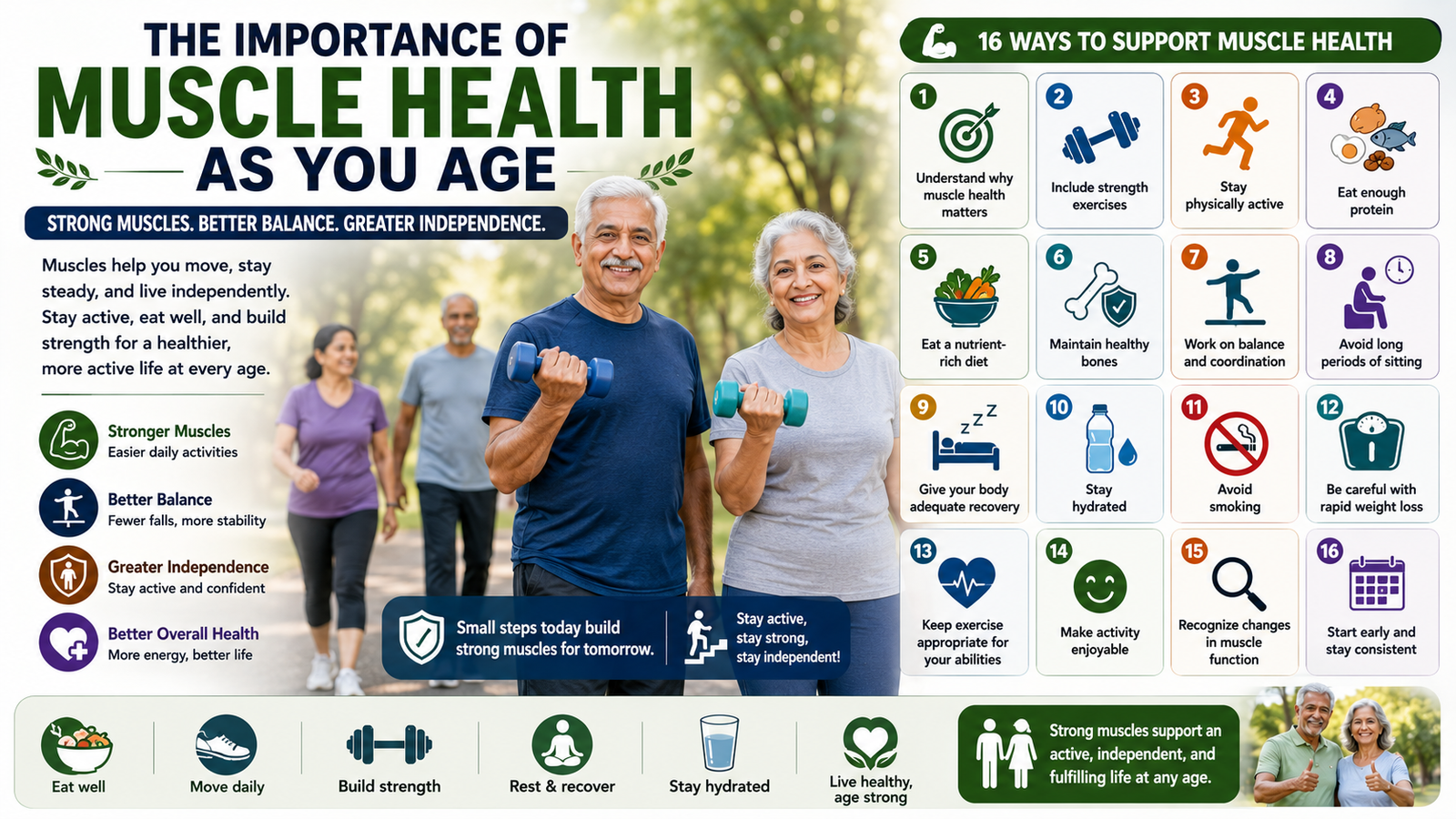
Muscles do much more than help the body move. They support posture, balance, strength, daily activities, and physical independence. As people grow older, muscle size and strength can gradually decline, especially when physical activity decreases. The good news is that regular movement, nutritious food, adequate recovery, and healthy lifestyle choices can help maintain muscle function throughout adulthood.
1. Understand Why Muscle Health Matters
Strong and functional muscles make everyday activities easier. Walking, climbing stairs, carrying groceries, getting up from a chair, and maintaining balance all depend on muscle strength. Maintaining muscle function can help older adults remain active and independent for longer.
2. Include Strength Exercises
Resistance training is one of the most useful ways to maintain muscle strength with age. Exercises can include bodyweight movements, resistance bands, light weights, or suitable gym equipment. Beginners should start gradually and focus on proper technique rather than lifting heavy loads immediately.
3. Stay Physically Active
Muscle health benefits from regular movement throughout the day. Walking, cycling, swimming, gardening, dancing, and other enjoyable activities can help prevent long periods of inactivity. Combining everyday movement with strength exercises can create a well-rounded activity routine.
4. Eat Enough Protein
Protein provides amino acids needed for muscle maintenance and repair. Foods such as lentils, beans, dairy products, eggs, fish, poultry, nuts, and seeds can contribute protein to a balanced diet. Including a suitable protein source with meals can make it easier to meet nutritional needs.
5. Eat a Nutrient-Rich Diet
Muscles need more than protein alone. A varied diet containing vegetables, fruits, whole grains, legumes, healthy fats, and other nutrient-rich foods helps provide energy and essential vitamins and minerals. Avoid relying heavily on highly processed foods when building everyday meals.
6. Maintain Healthy Bones Alongside Muscles
Muscles and bones work together to support movement. Activities that strengthen muscles can also contribute to better physical function, while adequate nutrition supports both systems. Taking care of bone health alongside muscle health is particularly valuable as people age.
7. Work on Balance and Coordination
Muscle strength is only one part of staying physically capable. Balance and coordination also become important with increasing age. Exercises such as controlled leg movements, heel-to-toe walking, tai chi, or other suitable balance activities can be incorporated into a routine.
8. Avoid Long Periods of Sitting
Extended inactivity can gradually reduce physical fitness. If your daily routine involves sitting for long periods, stand up regularly, walk around, stretch, or perform simple movements. Small activity breaks throughout the day can complement planned exercise.
9. Give Your Body Adequate Recovery
Muscles need time to recover after demanding exercise. Allow appropriate rest between challenging strength sessions and prioritize sufficient sleep. Recovery becomes an important part of maintaining a sustainable exercise routine as the body gets older.
10. Stay Hydrated
Water is important for normal body functions, including physical performance. Make a habit of drinking fluids regularly throughout the day, with greater attention during hot weather or physical activity. Older adults may not always feel thirsty as strongly, making regular hydration especially useful.
11. Avoid Smoking
Smoking can negatively affect circulation, physical fitness, and overall health. Avoiding tobacco can support a healthier lifestyle and make it easier to remain physically active over the years.
12. Be Careful With Rapid Weight Loss
Severely restricting food intake can make it difficult to obtain sufficient protein and other nutrients. When weight management is necessary, gradual and sustainable changes are generally more practical than extreme diets. A healthcare professional or registered dietitian can provide individualized guidance.
13. Keep Exercise Appropriate for Your Abilities
Exercise should match your current fitness level, age, and physical condition. Someone returning to activity after a long period of inactivity should begin with manageable movements and increase intensity gradually. People with medical concerns or significant physical limitations should seek professional guidance before starting a new exercise program.
14. Make Activity Enjoyable
A routine is easier to maintain when it fits your interests. Dancing, gardening, walking with friends, swimming, recreational sports, or group exercise can make physical activity feel less like a chore. Enjoyment can encourage consistency, which is more valuable than occasional intense workouts.
15. Recognize Changes in Muscle Function
Noticeable difficulty performing familiar activities, repeated falls, unusual weakness, or a significant decline in physical ability should not simply be dismissed as a normal part of aging. Such changes can have different causes and may deserve evaluation by a qualified healthcare professional.
16. Start Early and Stay Consistent
Muscle health is not something to think about only after reaching old age. Building strength and maintaining an active lifestyle during adulthood creates a useful foundation for later years. Even if you are starting at an older age, gradual improvements in activity can still be worthwhile.
Conclusion
Maintaining muscle health is an important part of healthy aging. Regular strength training, daily movement, adequate protein, balanced nutrition, hydration, quality sleep, and good recovery habits can help support strength and physical function. Taking care of muscles throughout life can make everyday activities easier and contribute to greater independence as you age.
Verification Code: MHSA8K36P