Introduction
A strong immune system helps children fight common infections and supports healthy growth and development. During childhood, the immune system continues to develop as the body learns to recognize and respond to different germs. While occasional illnesses are a normal part of growing up, healthy daily habits can help strengthen a child’s natural defenses.
Parents can support their child’s immune health through balanced nutrition, adequate sleep, regular physical activity, proper hygiene, and a positive environment. Building immunity naturally is a long-term process that focuses on overall wellness rather than quick fixes.
Why a Healthy Immune System Is Important
The immune system protects the body against bacteria, viruses, fungi, and other harmful microorganisms. It also helps repair damaged tissues and supports recovery after illness.
When children’s immune systems function effectively, they are better prepared to recover from common infections and maintain good overall health.
Provide a Balanced and Nutritious Diet
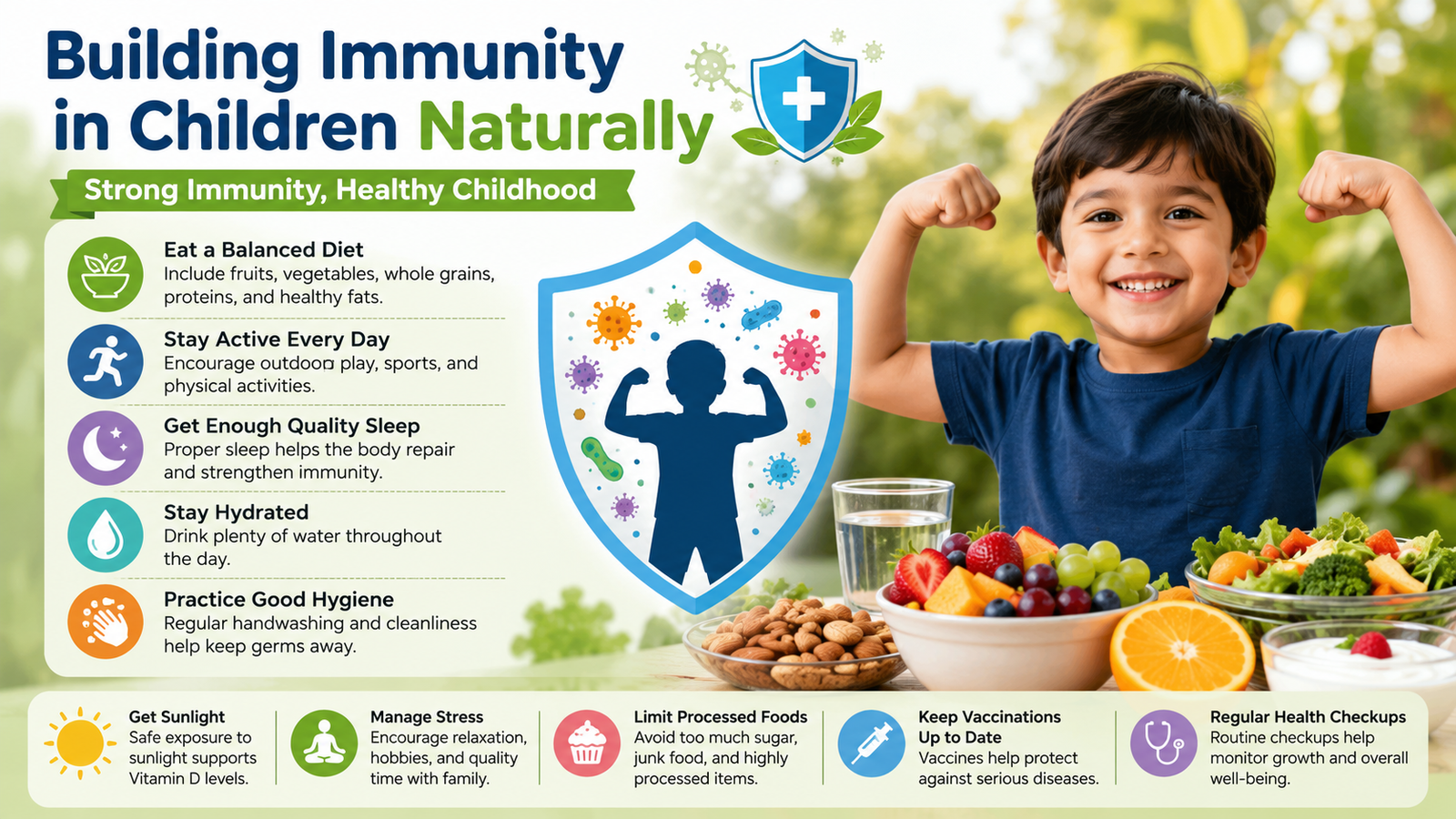
Healthy eating is one of the most effective ways to support immunity. Children need a variety of nutrients to help their immune system function properly.
Include foods such as:
- Fresh fruits
- Colorful vegetables
- Whole grains
- Lean proteins
- Dairy or fortified alternatives
- Nuts and seeds (when age-appropriate)
A balanced diet provides essential vitamins, minerals, antioxidants, and protein that support healthy growth and immune function.
Encourage Regular Physical Activity
Daily movement helps improve blood circulation, strengthens muscles, and supports overall health. Active children often develop better fitness and healthy body functions.
Activities may include:
- Outdoor play
- Cycling
- Swimming
- Running
- Dancing
- Simple sports
Encouraging active play also helps reduce excessive screen time.
Ensure Enough Quality Sleep
Sleep plays a major role in supporting the immune system. During sleep, the body repairs tissues and produces substances that help protect against illness.
Children should have a regular bedtime routine and receive the recommended amount of sleep based on their age. A quiet and comfortable sleeping environment encourages restful sleep.
Keep Children Properly Hydrated
Water supports many important body functions, including circulation, digestion, and temperature regulation. Proper hydration also helps the body function efficiently.
Encourage children to drink water regularly throughout the day, especially during outdoor activities or warm weather.
Teach Good Hygiene Habits
Simple hygiene practices reduce exposure to harmful germs.
Teach children to:
- Wash their hands before meals and after using the restroom
- Cover their mouth when coughing or sneezing
- Avoid touching their face with unwashed hands
- Keep personal items clean
These habits help reduce the spread of common illnesses.
Include Foods Rich in Vitamins and Minerals
Certain nutrients support normal immune function.
Examples include:
- Vitamin C from oranges, strawberries, guava, and bell peppers
- Vitamin A from carrots, sweet potatoes, and spinach
- Vitamin D through safe sunlight exposure and fortified foods
- Zinc from beans, dairy products, whole grains, and lean meats
A varied diet helps children receive these nutrients naturally.
Support a Healthy Gut
The digestive system plays an important role in overall health. Foods containing natural fiber and fermented foods, when suitable for a child’s age and diet, may support healthy digestion.
Healthy digestion contributes to better nutrient absorption and supports overall wellness.
Manage Stress and Emotional Well-Being
Children can also experience stress from school, social situations, or changes in routine. Emotional well-being supports overall health.
Parents can encourage open communication, family activities, creative hobbies, reading, and outdoor play to help children feel relaxed and secure.
Limit Highly Processed Foods
Foods high in added sugars, unhealthy fats, and excessive salt may replace more nutritious choices.
Offering homemade meals, fresh snacks, fruits, vegetables, and whole foods helps provide the nutrients needed for healthy growth and immune support.
Keep Vaccinations Up to Date
Routine childhood vaccinations help protect children from several preventable diseases. Parents should follow the recommended immunization schedule provided by healthcare professionals.
Vaccination works alongside healthy lifestyle habits to support long-term health.
Regular Health Checkups
Routine medical checkups allow healthcare providers to monitor a child’s growth, development, nutrition, and overall health.
Early identification of nutritional deficiencies or health concerns allows timely guidance and appropriate care.
Conclusion
Building immunity in children naturally involves creating healthy daily habits that support the body’s normal defense system. A nutritious diet, regular exercise, sufficient sleep, proper hydration, good hygiene, emotional well-being, and routine healthcare all contribute to stronger overall health.
Rather than relying on quick solutions, consistent healthy choices help children grow stronger, stay active, and develop a resilient immune system that supports lifelong wellness.
Verification Code
BC9N5LM42QX