Introduction
In today’s technology-driven world, many people spend a large part of their day sitting—whether at work, at school, or at home. This lack of movement can gradually affect physical fitness and overall health. One of the easiest ways to become more active is by walking. It is a simple activity that requires no expensive equipment or special skills, yet it offers remarkable benefits for the body and mind.
Walking every day is not only a form of exercise but also a healthy habit that improves energy, supports emotional well-being, and lowers the risk of many lifestyle-related diseases. Even a short daily walk can make a meaningful difference when practiced consistently.
Walking: A Simple Habit with Big Results
Unlike many workout routines that require gym memberships or professional guidance, walking can be done almost anywhere. A nearby park, a quiet street, a school playground, or even a workplace corridor can become a place for healthy movement.
People of different ages and fitness levels can include walking in their daily routine. The pace and distance can be adjusted according to individual comfort, making it one of the safest physical activities available.
How Walking Helps the Heart
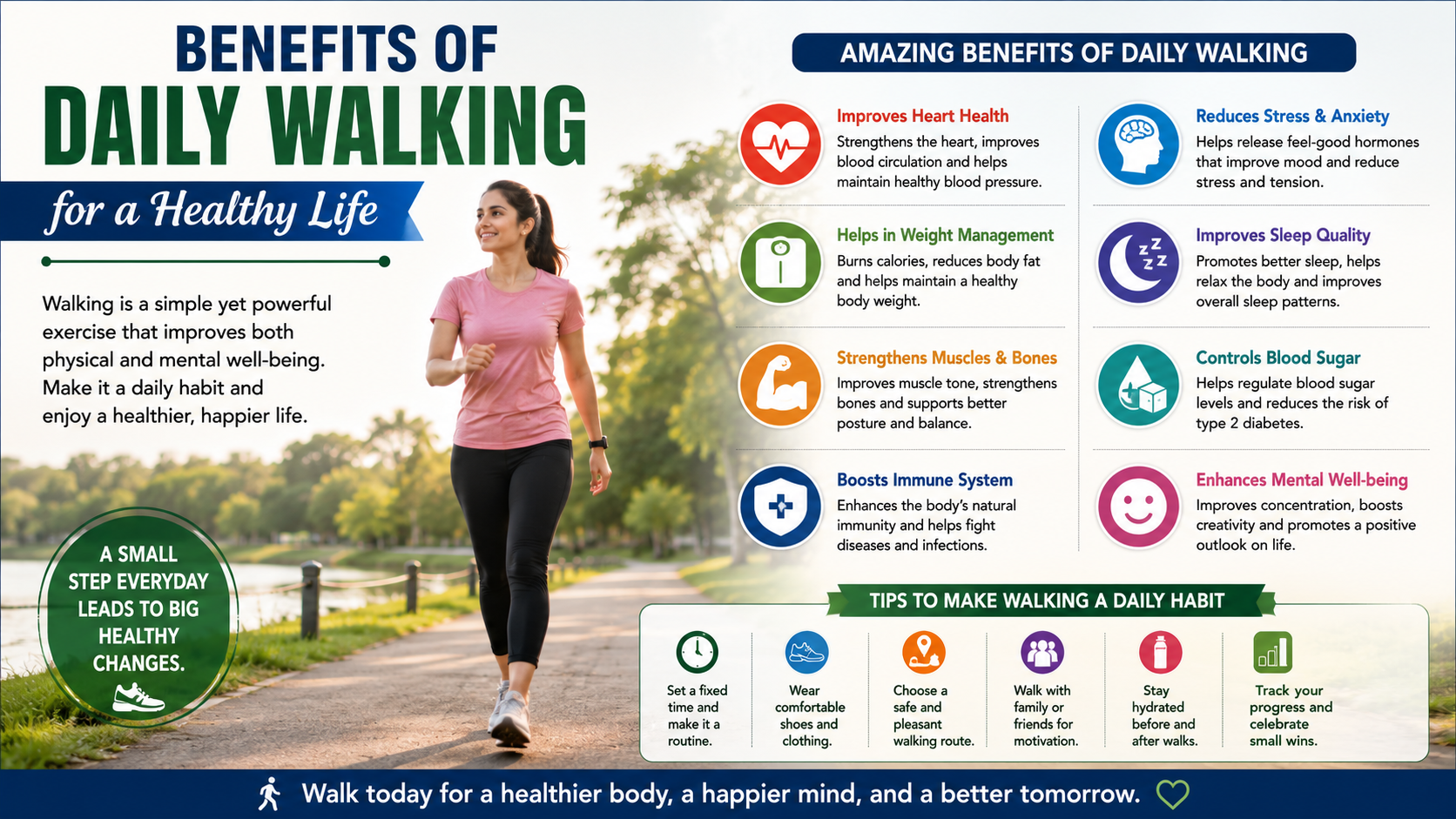
The heart works continuously to pump blood throughout the body. Regular walking encourages better blood circulation and helps the heart perform this task more efficiently.
People who walk consistently often experience healthier blood pressure levels and improved cardiovascular fitness. A stronger heart also supports better oxygen delivery to muscles and organs, helping individuals remain active throughout the day.
Supports Healthy Weight Management
Maintaining a healthy body weight requires balancing calorie intake with physical activity. Walking helps the body use energy efficiently and contributes to burning calories.
Although walking alone may not produce immediate weight loss, combining it with balanced eating habits can gradually improve body composition. The greatest advantage is that walking is easy to continue over long periods, making it a sustainable lifestyle habit.
Improves Muscle Strength and Joint Mobility
Every step taken during a walk activates several muscles, especially in the legs, hips, and lower back. Regular walking helps improve muscle endurance while keeping joints flexible.
Unlike high-impact exercises, walking places relatively little stress on the knees and ankles, making it suitable for older adults and beginners. Stronger muscles and healthier joints also improve balance and reduce the likelihood of falls.
Positive Effects on Mental Well-being
Walking benefits much more than physical fitness. Spending time outdoors while walking allows the mind to relax and recover from daily pressures. Fresh air, sunlight, and natural surroundings often help improve mood and reduce feelings of stress.
Physical movement also encourages the release of natural chemicals that promote relaxation and emotional well-being. Many people notice that they think more clearly and feel more refreshed after a peaceful walk.
Better Sleep and More Daily Energy
People who engage in regular physical activity often enjoy deeper and more refreshing sleep. Quality sleep allows the body to recover, repair tissues, and restore energy.
Walking during the day can help regulate the body’s natural sleep cycle, making it easier to fall asleep at night. As sleep improves, daytime energy, concentration, and productivity often improve as well.
Helps Lower the Risk of Chronic Diseases
Daily walking contributes to better long-term health by supporting several important body functions. Regular movement helps regulate blood sugar, improves cholesterol balance, and supports healthy blood circulation.
People who remain physically active are generally less likely to develop lifestyle-related conditions such as obesity, high blood pressure, type 2 diabetes, and certain heart diseases. While walking cannot eliminate every health risk, it is an effective preventive habit.
Easy Ways to Include More Walking
Developing a walking routine does not require major lifestyle changes. Small decisions throughout the day can increase physical activity.
Some practical ideas include:
- Walk to nearby shops instead of driving.
- Use stairs whenever possible.
- Take a short walk after meals.
- Walk during lunch or study breaks.
- Park slightly farther from your destination.
- Invite family members or friends to join you.
- Explore local parks or nature trails during weekends.
These simple changes make walking enjoyable and easier to maintain.
Staying Motivated
Many people begin walking with enthusiasm but lose motivation after a few weeks. Setting realistic goals helps maintain consistency. Tracking daily steps, listening to music or educational podcasts, and celebrating small achievements can keep the habit interesting.
Choosing different walking routes also prevents boredom and provides opportunities to enjoy new surroundings.
Conclusion
Walking is one of the simplest investments anyone can make in their health. It strengthens the heart, improves muscle function, supports healthy weight management, increases energy, enhances emotional well-being, and helps reduce the risk of chronic diseases. Because it is safe, affordable, and suitable for almost everyone, walking can easily become a lifelong habit.
The greatest health improvements often come from small actions performed consistently. By choosing to walk every day, individuals take an important step toward a healthier body, a calmer mind, and a better quality of life. Every journey to better health truly begins with a single step.
Verification Code: WK8P4XT71QM