Introduction
Good health is one of the greatest assets a person can possess, and proper nutrition is the foundation upon which good health is built. The food we eat provides the body with energy, supports growth and development, repairs damaged tissues, and protects against diseases. However, simply eating enough food is not sufficient; the body requires the right nutrients in the correct proportions. This is where the concept of a balanced diet becomes important.
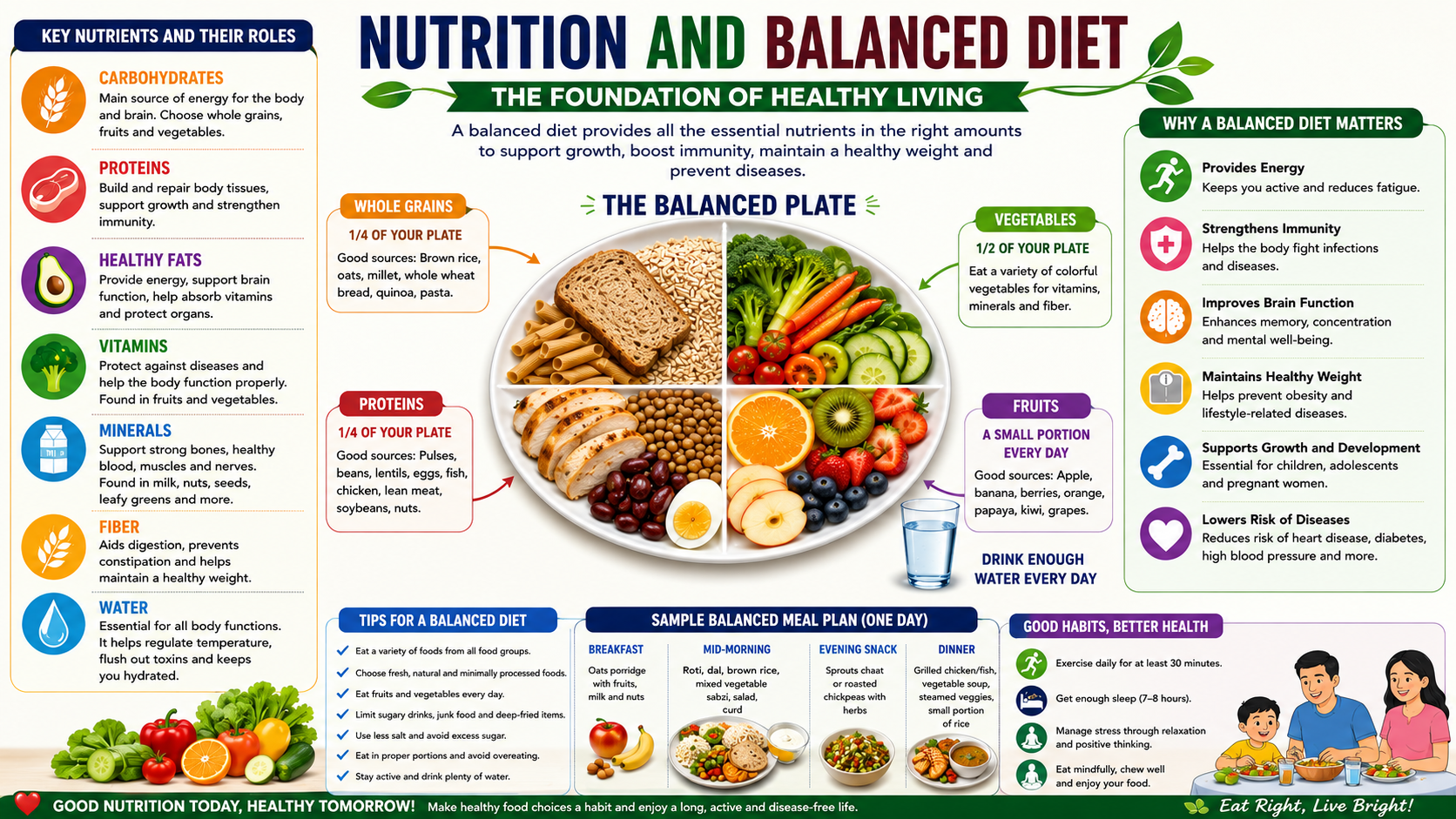
A balanced diet is a combination of different foods that supplies all the essential nutrients needed by the body to function effectively. Proper nutrition improves physical health, supports mental well-being, strengthens immunity, and contributes to a longer and healthier life.
Understanding Nutrition
Nutrition is the process through which the body obtains and uses nutrients from food for growth, energy production, tissue repair, and maintenance of body functions. Every cell, organ, and system in the body depends on nutrients to perform its role efficiently.
The quality of nutrition a person receives directly influences their health, productivity, and resistance to illness. Poor nutrition can lead to weakness, poor growth, reduced immunity, and an increased risk of chronic diseases.
What Is a Balanced Diet?
A balanced diet is one that contains all the major nutrients in the right amounts to meet the body’s requirements. It includes a variety of foods from different food groups rather than relying heavily on a single type of food.
The exact composition of a balanced diet may vary depending on age, gender, activity level, and health conditions, but the basic principle remains the same: providing the body with adequate nutrients without excess or deficiency.
A healthy diet should include carbohydrates, proteins, fats, vitamins, minerals, fiber, and water in suitable proportions.
Essential Components of a Balanced Diet
1. Carbohydrates: The Body’s Main Energy Source
Carbohydrates provide the energy needed for daily activities, exercise, and body functions. They are the primary fuel source for the brain and muscles.
Healthy sources of carbohydrates include whole grains, rice, oats, fruits, vegetables, and legumes. Complex carbohydrates are generally preferred because they release energy gradually and help maintain stable blood sugar levels.
2. Proteins: Building and Repairing the Body
Proteins are essential for growth, muscle development, tissue repair, and the production of enzymes and hormones. They play an important role throughout life, especially during childhood, adolescence, pregnancy, and recovery from illness.
Good sources of protein include pulses, beans, lentils, milk, eggs, fish, lean meat, nuts, and seeds.
3. Healthy Fats: Essential for Body Functions
Fats often receive negative attention, but healthy fats are necessary for many important functions. They provide concentrated energy, support brain health, help absorb certain vitamins, and protect internal organs.
Healthy fat sources include nuts, seeds, avocados, and vegetable oils. Excessive consumption of unhealthy fats should be avoided as it may increase the risk of heart-related problems.
4. Vitamins: Protecting and Regulating the Body
Vitamins are needed in small amounts but are essential for maintaining health and preventing deficiencies. Different vitamins perform different functions, such as supporting vision, immunity, skin health, and bone development.
Fruits, vegetables, dairy products, and whole foods provide a wide range of vitamins necessary for the body.
5. Minerals: Supporting Growth and Body Processes
Minerals help build strong bones and teeth, regulate fluid balance, and support muscle and nerve function.
Important minerals include calcium, iron, potassium, magnesium, and zinc. These can be obtained from milk products, leafy vegetables, nuts, seeds, and whole grains.
6. Dietary Fiber: Supporting Digestive Health
Fiber helps maintain a healthy digestive system by promoting regular bowel movements and preventing constipation. It also contributes to feelings of fullness and supports healthy cholesterol levels.
Whole grains, fruits, vegetables, legumes, and seeds are excellent sources of dietary fiber.
7. Water: The Most Important Nutrient
Water is essential for survival and participates in nearly every body function. It helps regulate body temperature, transport nutrients, remove waste products, and maintain hydration.
Adequate water intake is an important part of a balanced diet and overall health.
Importance of a Balanced Diet
Provides Energy for Daily Activities
The body requires energy to perform even the simplest tasks, including breathing, walking, studying, and working. A balanced diet supplies this energy efficiently and helps prevent fatigue and weakness.
Supports Growth and Development
Children and teenagers require adequate nutrition for proper physical and mental development. Nutrient deficiencies during growth years can affect height, learning ability, and overall development.
Strengthens the Immune System
A well-nourished body is better equipped to fight infections and recover from illness. Nutrients support the production of immune cells and help maintain the body’s defense mechanisms.
Improves Brain Function
Proper nutrition contributes to concentration, memory, learning ability, and emotional stability. The brain requires a continuous supply of nutrients to function efficiently.
Helps Maintain Healthy Body Weight
A balanced diet helps regulate calorie intake and reduces the risk of both undernutrition and excessive weight gain. Combining healthy eating with regular physical activity supports long-term weight management.
Reduces the Risk of Chronic Diseases
Healthy eating habits can lower the likelihood of developing conditions such as heart disease, obesity, high blood pressure, and metabolic disorders later in life.
Promotes Healthy Bones and Muscles
Nutrients such as protein, calcium, and minerals are essential for maintaining strong bones and healthy muscles throughout life.
Consequences of Poor Nutrition
Poor dietary habits can lead to several health problems, including:
- Fatigue and reduced energy
- Weak immunity
- Poor concentration
- Delayed growth in children
- Digestive problems
- Nutrient deficiencies
- Weight-related health issues
- Increased risk of chronic diseases
Both overeating and undernutrition can negatively affect health and quality of life.
Healthy Eating Habits
Maintaining a balanced diet involves more than selecting nutritious foods. Healthy eating habits are equally important.
Some useful practices include:
- Eating meals at regular intervals.
- Including fruits and vegetables in daily meals.
- Limiting highly processed foods.
- Reducing excessive sugar and salt intake.
- Choosing whole foods whenever possible.
- Drinking sufficient water throughout the day.
- Practicing portion control to avoid overeating.
Balanced Diet for Different Age Groups
Nutritional requirements change throughout life. Children need nutrients for growth and development, adults require nutrition to maintain health and productivity, and older adults may need additional nutrients to preserve bone and muscle strength.
Pregnant and breastfeeding women also have increased nutritional requirements to support both mother and child.
Conclusion
Nutrition and a balanced diet are essential pillars of a healthy lifestyle. The body depends on a variety of nutrients to grow, function, repair itself, and protect against disease. Consuming a diverse range of nutritious foods in appropriate quantities helps maintain physical fitness, mental sharpness, and overall well-being.
Adopting healthy eating habits from an early age can provide lifelong benefits and reduce the risk of many health problems. A balanced diet is not about strict restrictions or avoiding favorite foods; it is about making informed choices that nourish the body and support a healthier and more active life.