Introduction
Your body performs countless activities every moment, even when you are resting. The heart continues beating, the brain processes information, and the digestive system manages nutrients from food. These activities require a constant supply of energy. One important element that helps the body release this energy is oxygen.
Although breathing brings oxygen into the lungs, its journey does not end there. Oxygen must enter the bloodstream and reach individual cells, where it supports essential processes that keep the body functioning. Understanding this journey helps explain why oxygen is necessary for everyday life.
1. How Oxygen Reaches the Cells
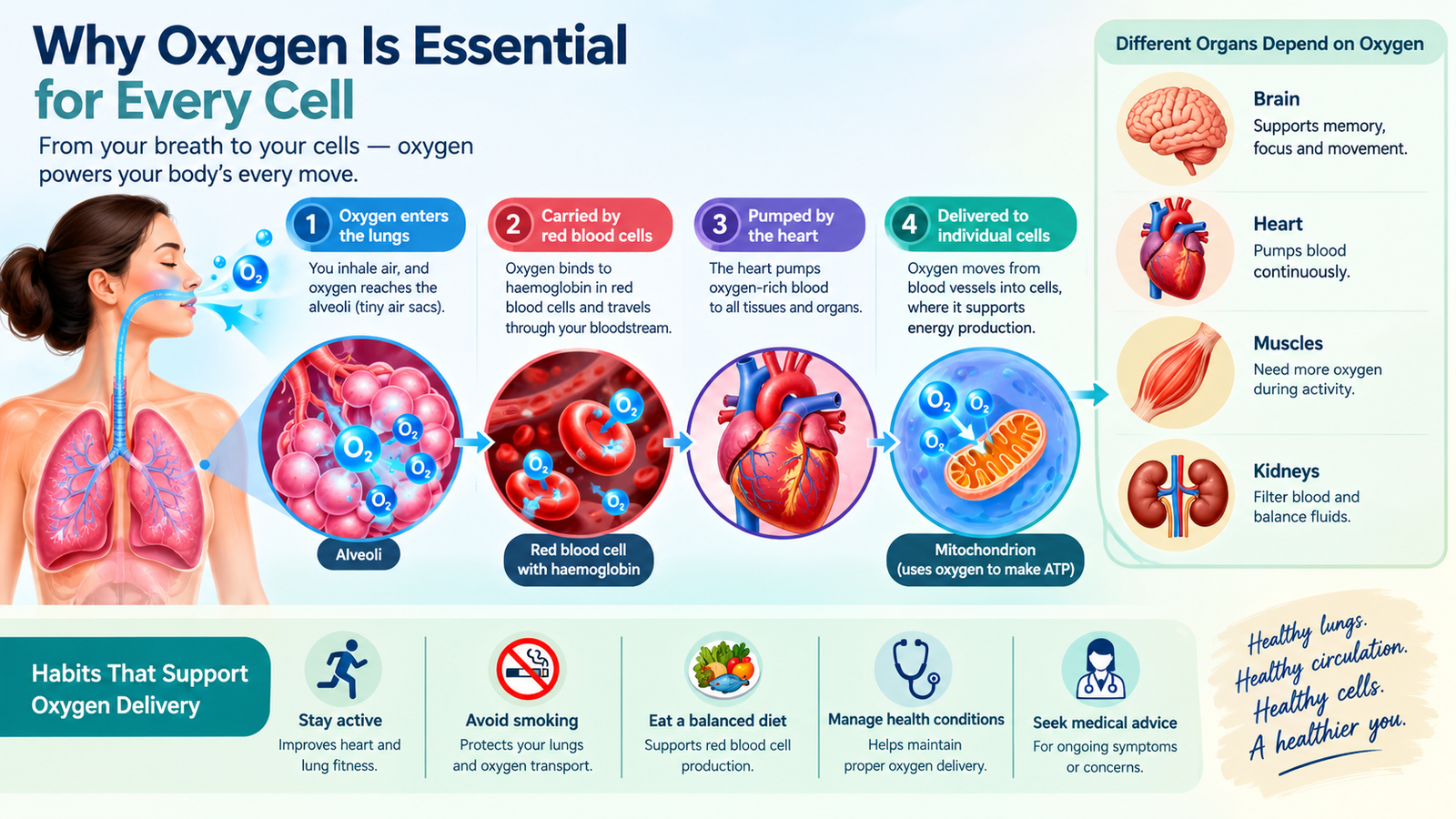
The process begins when air enters the lungs during inhalation. Inside the lungs are tiny air sacs called alveoli. Oxygen passes through their thin walls into nearby blood vessels.
Red blood cells contain haemoglobin, a protein that binds to oxygen and carries it through the bloodstream. The heart pumps this oxygen-rich blood towards different tissues and organs. Oxygen then moves from small blood vessels into surrounding cells, where it can be used.
This delivery system depends on healthy lungs, effective blood circulation, and sufficient red blood cells. If any part of the process is disrupted, some tissues may receive less oxygen than they need.
2. Oxygen Helps Cells Produce Energy
Every cell needs energy to perform its specific job. Muscle cells use energy to contract, nerve cells rely on it to transmit signals, and liver cells require it to process nutrients and other substances.
Inside many cells, structures called mitochondria use oxygen during aerobic cellular respiration. This process helps extract usable energy from nutrients, particularly glucose, and store it in a molecule called ATP. ATP provides energy for many cellular activities.
Without enough oxygen, cells cannot maintain their usual rate of aerobic energy production. They may rely more heavily on less efficient pathways, which can limit how well they function when the shortage continues.
3. Different Organs Depend on Oxygen
Oxygen is important throughout the body, but some organs are especially sensitive to interruptions in its supply.
The brain: Brain cells need a continuous energy supply to support memory, attention, movement, and other functions. A serious reduction in oxygen delivery can affect brain function within a short time.
The heart: Heart muscle works continuously to circulate blood. Its cells require oxygen to produce the energy needed for regular contractions.
The skeletal muscles: During physical activity, muscles use more energy. Their oxygen requirements often increase to support the additional workload.
The kidneys: These organs filter blood, regulate fluid and electrolyte balance, and perform other important tasks. Their cells also depend on an adequate oxygen supply.
Every organ has its own energy demands, so the effects of insufficient oxygen can vary according to the tissue involved and the severity of the shortage.
4. What Happens When Cells Receive Too Little Oxygen?
When oxygen delivery falls below the body’s needs, a condition called hypoxia may develop in affected tissues. Its effects depend on the cause, duration, and severity of the problem.
A person may experience breathlessness, unusual tiredness, dizziness, confusion, or reduced exercise tolerance. However, these symptoms can also occur for many other reasons and do not independently confirm an oxygen shortage.
Severe oxygen deprivation can injure cells and interfere with the normal functioning of vital organs. Possible causes include serious lung disease, certain heart conditions, significant blood loss, and exposure to environments with insufficient oxygen.
Sudden severe breathing difficulty, blue or grey lips, or new confusion requires emergency medical attention.
5. Everyday Habits That Support Oxygen Delivery
You cannot improve oxygen delivery through one particular food or breathing technique alone. Instead, several everyday habits can support the systems responsible for moving oxygen around the body.
- Stay physically active: Regular movement supports cardiovascular fitness and helps the body use oxygen efficiently.
- Avoid smoking: Tobacco smoke damages the lungs and contains carbon monoxide, which interferes with oxygen transport by haemoglobin.
- Eat a balanced diet: Iron, vitamin B12, folate, and other nutrients support normal red blood cell production. Supplements should be used when appropriate, rather than taken unnecessarily.
- Manage existing health conditions: Following medical advice for lung disease, heart problems, or anaemia can help maintain adequate oxygen delivery.
- Seek medical advice for persistent symptoms: Ongoing breathlessness or unexplained fatigue should not automatically be attributed to poor fitness.
Healthy habits can support normal oxygen transport, but they cannot replace medical treatment when an underlying condition affects breathing or circulation.
6. When Should You Seek Professional Help?
Consult a healthcare professional if you repeatedly experience breathlessness during ordinary activities, persistent unexplained fatigue, or dizziness that interferes with daily life. A clinician may assess your symptoms and medical history and recommend tests when necessary.
Seek emergency care for sudden or severe breathing difficulty, chest pain, fainting, or new confusion. These symptoms can have serious causes and should not be ignored.
Conclusion
Oxygen does much more than support breathing. It helps cells release energy from nutrients, allowing the brain to process information, the heart to pump blood, and muscles to carry out movement. The lungs bring oxygen into the body, while red blood cells and the circulatory system distribute it to tissues.
Protecting lung and cardiovascular health, eating a balanced diet, and responding to unusual symptoms can help support this essential delivery system. At the cellular level, oxygen is a key part of the process that keeps the human body working.
Verification Code: O7X4K9M2R6