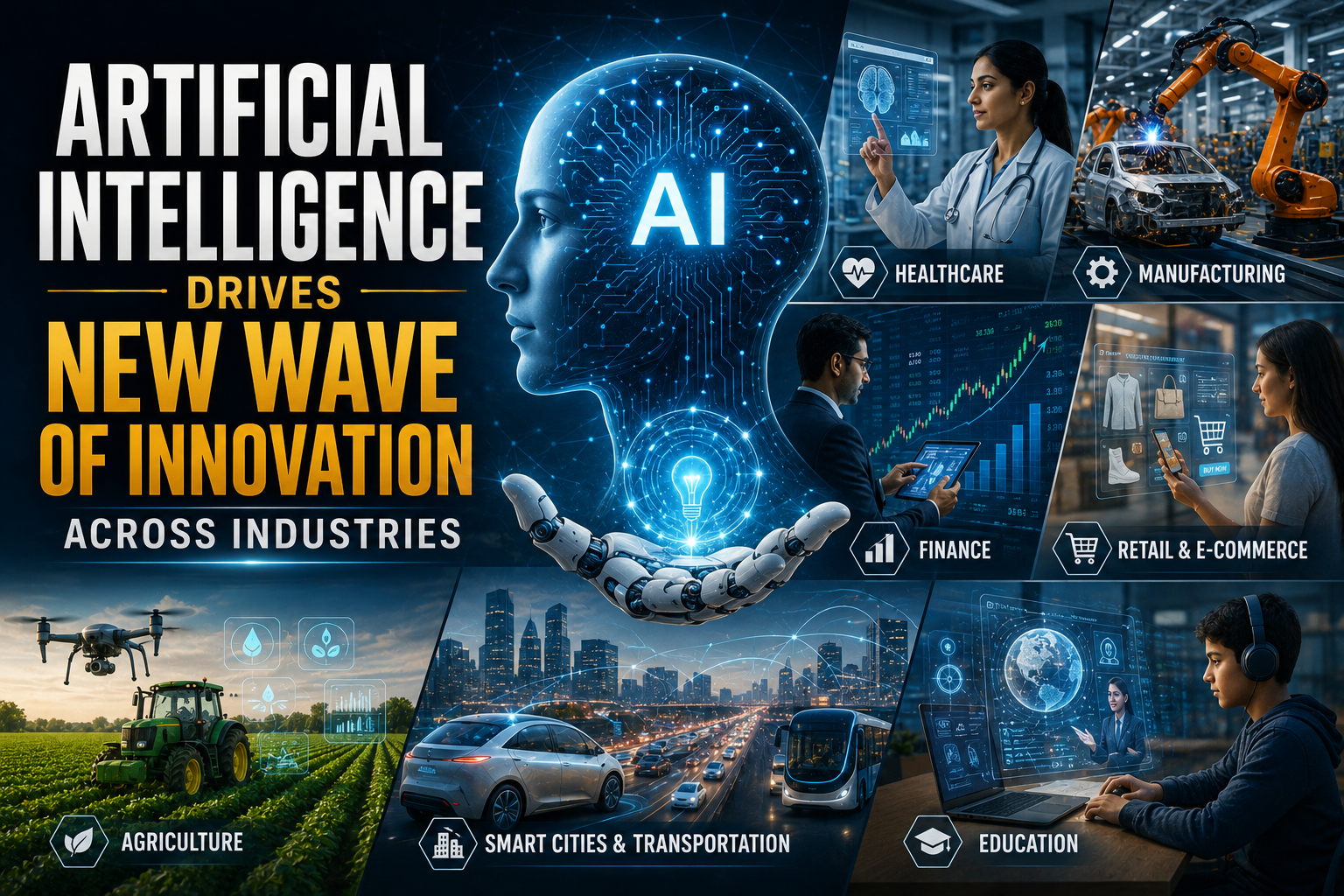
Artificial intelligence (AI) continues to reshape industries around the world, with organizations adopting advanced technologies to improve efficiency, decision-making, and customer experiences. Industry experts describe the current period as one of the most significant technological transformations in recent decades.
Businesses across sectors are investing heavily in AI-powered tools and platforms. From healthcare and finance to manufacturing and retail, organizations are exploring ways to automate routine processes and generate deeper insights from large volumes of data. Executives increasingly view AI as a strategic capability rather than a purely technical solution.
Generative AI technologies have attracted particular attention. These systems can create text, images, software code, and other forms of content with remarkable speed and sophistication. Companies are using generative AI to assist customer support teams, accelerate product development, and improve operational workflows.
The software industry has experienced rapid changes as developers integrate AI capabilities into applications and enterprise platforms. Productivity tools, cybersecurity solutions, and business intelligence systems now commonly include AI-driven features designed to enhance user experiences and reduce manual effort.
Healthcare organizations are exploring AI applications in diagnostics, medical imaging, drug discovery, and patient care management. Researchers believe machine learning algorithms can help identify patterns that may support earlier detection of diseases and more personalized treatment approaches.
Cybersecurity remains a critical concern as digital transformation accelerates. While AI helps organizations detect threats more effectively, cybercriminals are also adopting sophisticated technologies. Security experts emphasize the importance of maintaining strong governance frameworks and continuous monitoring capabilities.
Technology companies continue competing to develop increasingly powerful AI models. Investments in cloud computing infrastructure, specialized hardware, and research initiatives have reached record levels. Industry leaders argue that collaboration between governments, academic institutions, and private companies will be essential for responsible innovation.
Ethical considerations have become a major focus area. Policymakers and technology experts are debating issues related to privacy, transparency, bias, and accountability. Many organizations have established internal governance frameworks to guide the development and deployment of AI systems.
Workforce implications remain an important topic of discussion. While automation may reduce demand for certain repetitive tasks, experts believe new opportunities will emerge in areas such as AI development, data analysis, digital strategy, and human-machine collaboration. Continuous learning and skill development are expected to play increasingly important roles in career growth.
Consumer adoption of AI-powered services continues to expand. Smart assistants, recommendation systems, language translation tools, and personalized digital experiences have become common parts of everyday life. User expectations regarding convenience and responsiveness continue to influence technology development priorities.
Industry analysts predict that AI-driven innovation will remain a major growth driver for the global economy. Organizations that successfully combine technological capabilities with ethical governance and workforce development strategies are likely to gain significant competitive advantages in the years ahead.